Part III · What Do You Actually Win?
Chapter 7
What Does Beating the Villain Give You?
We will come back to that morning. First, look at the win itself.
There is something inside the hunter's successful day beyond the food. He gets an answer to a question he had before the food arrived.
Can I do this?
Yesterday the animal could escape him. Today, at least once, it did not. Something in the world resisted what he wanted, and he managed to change the result.
I think that is part of why winning can feel larger than the reward.
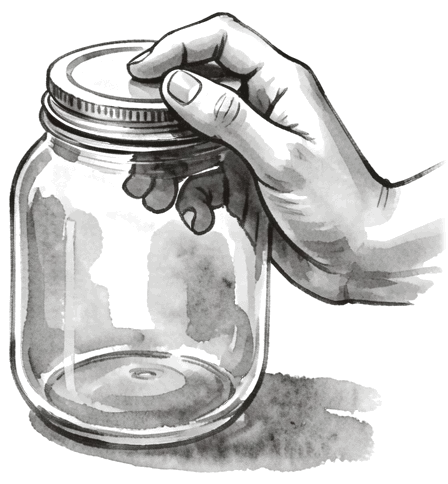
Take a jar that refuses to open.
You try once. Then you change your grip. Then a cloth appears. Someone nearby says, "Give it to me." "No, wait." When it finally turns, there is a small satisfaction that cannot be entirely explained by jam.
There is a much more impressive word for this than the situation deserves.
Power.
We usually imagine power at a larger scale. Money. Office. An army.
But underneath those arrangements is a fairly ordinary question.
Can you affect what happens? Can something that would otherwise refuse you be made to yield?
Nietzsche linked the feeling of increasing power with overcoming resistance. A win can feel like an expansion.
I could not do that. Now I can.
The particular outcome matters. What it tells you about your ability to produce outcomes can matter too.
Your move
Suppose somebody secretly loosens the lid before handing you the jar. You still get the jam.
But if you discover what happened, some of the satisfaction disappears. The result was real.
The evidence about you was not quite what it seemed.
Of course a win can lie to us.
A lucky bet can produce exactly the same I knew it as a good decision. The feeling of power is not a certificate of capability.
Still, the feeling itself helps explain the attraction of a real fight. A goal can tell you what you want. Resistance gives you a way to discover whether you can make something happen.
When it yields, the reward contains that discovery.
Maybe that is the extra thing the winner takes home. Not just the meat. Not just the opened jar. Some new evidence about what they can do when the world does not cooperate.
If I could do it yesterday, how long can I keep being able to do it?
The Belt Won't Throw the First Punch
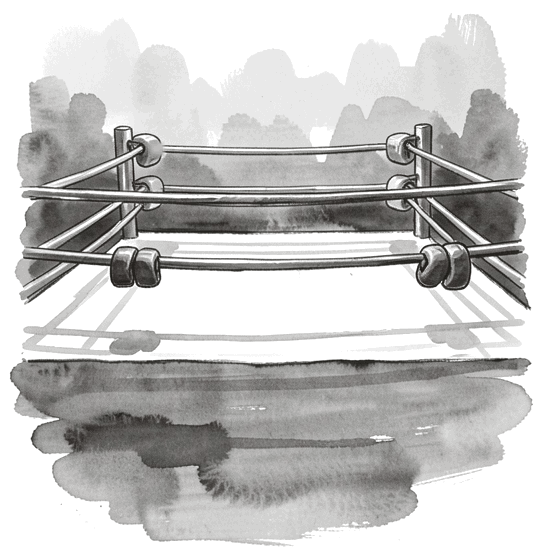
A boxer can keep the belt. That part is straightforward. He won it. The fight happened. Now leave him out of training for years. Then put him in front of somebody who has been training.
The belt will still be in the cabinet. It will not throw the first punch.
"You were a champion?"
"Yes."
"Can you still do it?"
A different question.
The first asks about something that happened. The second asks about something that could happen now. And the answer to the first does not permanently settle the second.
I think we become less careful about this distinction when the trophy looks like a title, a reputation or a line on a CV.
I was good at this slowly turns into I am good at this.
Sometimes the world has changed while we were still enjoying the evidence that we once understood it.
A salesperson may remember exactly how to answer a customer who no longer exists.
The old answer can be beautifully delivered and still answer the wrong question.
Researchers studying procedural skill retention find that performance can deteriorate during periods without practice.
How much varies with the task and how it was learned. Some learning stays with us remarkably well. Other abilities require regular contact with the conditions in which we expect to use them.
That changes the role of resistance.
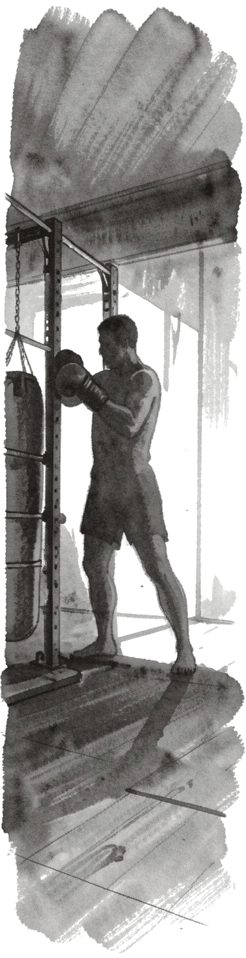
So far it has given us something to pursue and something to overcome. It may also help keep the capacity for overcoming alive.
The opponent does not stand there politely while you rehearse the person you used to be. It moves. It answers. It exposes the gap between what you remember being able to do and what you can still do.
That is the distinction I want to keep.
The trophy records a win. Practice helps preserve the ability to produce one.
What happens to the first win while you are getting the second?
Think about somebody opening a restaurant. People turn up. The food leaves the kitchen. A few months later it is really working. Now the owner wants a second one.
"Another branch?"
"That's the plan."
"What happens to this one?"
"I'll manage both."
Opening the second restaurant is one problem. Keeping the first one functioning while opening the second is another.
If he opens a beautiful new place and the original quietly falls apart, how much power has he added?
This is where the word power gets more precise. For this book:
the retained ability to produce another win while protecting the wins already achieved.

You achieve X. Can you keep X? Can X help you achieve Y? Then can you keep both while trying for Z?
The first achievement has become part of the machinery for the next one.
That is how useful gains can compound.
If every problem in both kitchens now needs his personal attention, two restaurants may give him less freedom to act than one did. He has become the emergency number for a larger territory.
That may be a poor kind of power.
"Did you need me?"
"We sorted it."
"Oh."
Hopefully followed by relief.
One win can be an event. Repeated wins that keep useful gains alive begin to look like a system.
And there is one more complication. Sometimes the system doing the winning is much larger than us. We have contributed very little to its victory. Still, when it wins, we say:
"We won."
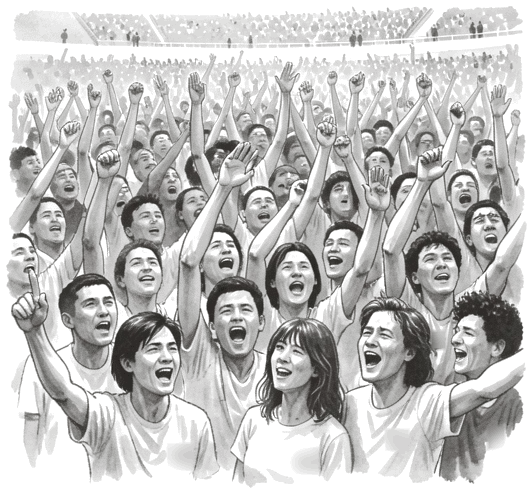
We Won.
You Were on the Sofa.
"We won."
This is a perfectly ordinary thing to say after a cricket match. Even if you spent the entire match on a sofa, ate half a packet of chips and contributed one very confident bowling suggestion to a television that cannot transmit suggestions. The players did the winning. You still feel it.
I don't think we should dismiss that feeling as pretend. Something actually changed in the person watching. He was tense, then delighted. Tomorrow he may walk into the office looking forward to a colleague who supports the other team.
"So. What happened yesterday?"
As if the colleague might have missed it.
The interesting part is how the team's power crossed the distance between the stadium and the sofa. The supporter cannot suddenly bowl faster. He has acquired no new cricketing ability. Yet an opponent has been defeated, and the victory feels partly his.
Apparently the protagonist does not always have to be our individual self. It can be us.
Psychologist Robert Cialdini and his colleagues called it
basking in reflected glory.
Students were more likely to display their university affiliation after a victory. Descriptions of results shifted toward "we" when the team had won.
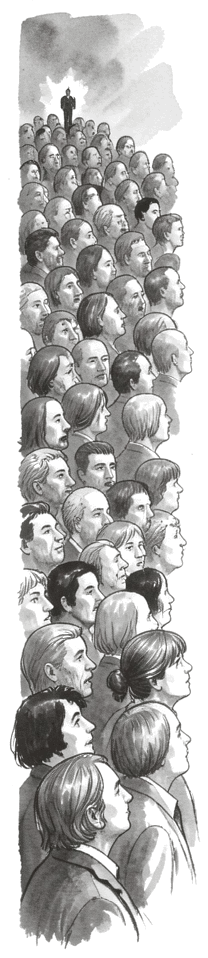
You can see a related thing with prestigious employers.
Ask someone what they do and sometimes the company name arrives before the actual work. Fair enough. The name tells you something.
But occasionally it tells you rather more about how the speaker wants to be seen than about how they spend Tuesday.
The organisation is powerful. I belong to the organisation. Some of that power must therefore belong near me.
This is not only about winners. A supporter can remain loyal through years of terrible cricket, which takes the explanation beyond reflected glory into memory, affection and belonging. Still, victory makes one part especially visible.
Somebody on our side stood against somebody on the other side. We came out stronger.
There is a slightly awkward consequence. If belonging lets you borrow power, being kept outside is not merely an administrative inconvenience.
The closed door is keeping you away from something you can already imagine feeling.
Check · From memory
For this book, what is power? The definition has two halves. Say them in your head, then look.
- 1The retained ability to produce another win
- 2while protecting the wins already achieved.
Close
Which makes the moment of entry very interesting.
Because the institution you resented yesterday may become the institution you proudly name tomorrow.
Notes and references
What Does Beating the Villain Give You?
[1] Nietzsche, Friedrich. The Antichrist, section 2.
The Belt Won't Throw the First Punch
[1] Tatel, C. E., & Ackerman, P. L. (2025). "Procedural skill retention and decay." Psychological Bulletin, 151(6), 696–736.
We Won. You Were on the Sofa.
[1] Cialdini, R. B., et al. (1976). "Basking in Reflected Glory: Three (Football) Field Studies."
From Villains, Power & Success: What Are You Fighting? by Uday Wagh. Abridged for the screen.