Part II · Why the Fight Feels Good
Chapter 6
Liking It Is Not Enough
Dopamine has had a slightly strange public career.
Somewhere along the way it became the chemical explanation for almost anything enjoyable.
Eat chocolate. Dopamine.
Scroll Instagram for an hour. Dopamine.
Buy something you have wanted for months.
“Dopamine hit.”
The word has almost become shorthand for that felt good.
I had more or less absorbed the same idea.
Then the hunter from the last chapter created a problem for it.
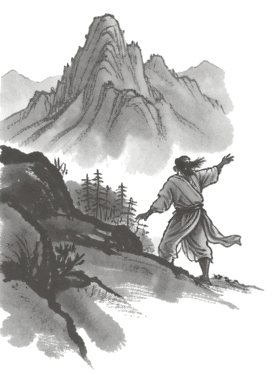
He goes out before there is any meat.
He walks before there is any meat.
He follows tracks, loses them, searches again and sometimes comes home with nothing.
Then the next morning:
“Going again?”
“Yeah.”
The pleasure of eating cannot explain that whole sequence. Eating happens at the end.
So what is doing the work before that?
Modern reward neuroscience gives us a useful distinction.
Researchers Kent Berridge and Terry Robinson distinguish between liking something and wanting it.
Your move · Do liking and wanting go together?
In normal conversation, we usually treat the two as though they belong together.
“I love biryani.”
Presumably I want biryani.
“I've wanted that car for years.”
Presumably I am going to enjoy the car.
Most of the time that assumption works well enough that there is no reason to question it.
But liking and wanting are not quite the same job.
Liking is closer to the pleasure of the reward once it is experienced.
The food tastes good.
You enjoy the thing you finally got.
Wanting is the pull toward it before that.
You notice it.
You care about obtaining it.
You are willing to move.
Dopamine appears to be much more important to this second part than the old “pleasure chemical” description suggests.
In animal research, scientists have been able to interfere heavily with dopamine systems and reduce how strongly an animal works to obtain food without completely removing its positive reaction when sweetness is actually placed in its mouth.
That took me a moment to understand.
The animal can still like the reward.
The problem is getting it to go after the reward.
Which is almost exactly our terrible hunter from Chapter 5.
Put the meat in front of him.
“Good?”
“Very.”
“So you'll hunt tomorrow?”
“No.”
The absurdity is useful because it separates two things I had bundled together.
Maybe the simplest way to put it is this:
A reward has to do two jobs.
It has to be worth having when it arrives.
And it has to be worth moving toward before it does.
Liking helps explain the first.
Wanting helps explain the second.
That makes dopamine much more relevant to the question we started with.
The hunter does not need pleasure after the hunt to somehow travel backward through time.
His brain needs a way of making something that is still ahead matter now.
Berridge and Robinson use the term incentive salience for part of this process.
It sounds technical.
The idea is fairly ordinary.
Something becomes motivationally important enough to attract attention and pull behaviour toward itself.
And it does not always have to be the final reward sitting directly in front of you.
The brain learns what tends to lead toward rewards.
For the hunter, a useful track can begin to matter because of what tracks have led to before.
The track is not food.
But it may mean food is closer.
That is enough to affect what happens next.
Follow it.
Ignore it.
Turn around.
Keep going.
Learning helps decide what deserves attention, and wanting gives some of those learned signals motivational weight.
Now anticipation makes more sense too.
If the brain can respond to what predicts a reward, then the reward can begin affecting behaviour before possession.
Nothing mystical needs to happen.
You simply know, or believe, that something you want may be getting closer. And once that possibility matters, behaviour changes.
This doesn't mean anticipation is always pleasant.
A hunter can want the prey and hate the next hill.
Someone can desperately want to pass an exam while hating revision.
Wanting can be irritating, exhausting, even obsessive.
That is another reason I think the pleasure story confused me.
If wanting and pleasure were the same thing, then everything we intensely pursued should feel good while we pursued it.
It obviously doesn't.
Sometimes you are tired of the whole thing and still don't want to stop.
That sounds contradictory only if motivation and pleasure are supposed to be the same.
Once they are separated, the contradiction becomes much smaller.
You can dislike what you are doing right now and still strongly want where it leads.
I suspect most people have felt that without needing a neuroscience paper to tell them. The paper just gives us better language for it.
There is another odd consequence.
Sometimes the wanting becomes larger than the having.
Not always. But enough that the experience is familiar.
“You finally bought it?”
“Yeah.”
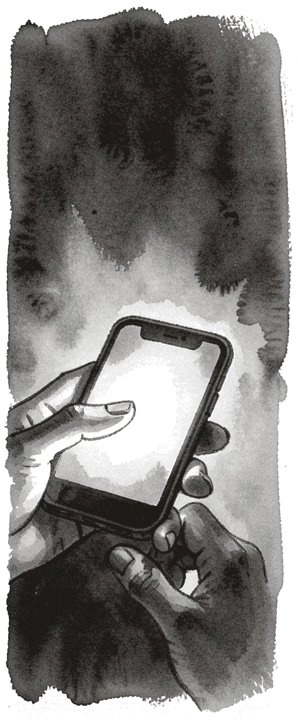
“The phone you've been watching reviews about for three weeks?”
“That one.”
“So? Happy?”
“Yeah. It's good.”
A pause.
“You don't sound very excited.”
“I think I was more excited yesterday.”
Nothing is wrong with the phone.
The person may use it happily for years.
But yesterday the entire thing still pointed forward.
Which model?
Which colour?
Should I actually buy it?
When will it arrive?
What will it be like?
Today most of those questions have disappeared.
The wanting had somewhere to go.
Now, at least for this particular object, it has arrived.
I don't think we should turn that into another universal rule and say anticipation is always better than possession.
That clearly isn't true.
A starving person does not need a lecture about enjoying the anticipation of lunch.
Sometimes getting the thing is vastly better than wanting it.
The narrower point is enough.
Pursuit and possession are psychologically different states.
Before possession, the wanting system still has a job.
There is something ahead.
There is distance left to close.
There are things to notice and learn.
Once you have the reward, that particular pursuit is finished.
You can continue liking what you have.
You just cannot keep obtaining the same thing you have already obtained.
That may help explain why anticipation and pursuit can sometimes feel richer than we expect them to.
There is still movement inside them.
Which takes us back to the hunter.
The meal matters.
Of course it does.
But if we only look at the pleasure of eating, we miss most of the behavioural problem.
He has to want before he can have.
He has to learn what is worth following.
He has to respond to the possibility of getting closer.
He has to keep moving while the reward still exists somewhere in the future.
That is the role dopamine helps us understand.
Not simply:
This feels good.
More like:
That matters. Go toward it.
The reward comes later.
Wanting cannot.
There Was Never an "I've Made It"
It rebuilds the person who has to go out tomorrow.
That is the part of the hunter's dinner we nearly missed. The food is the reward, yes. The thing worth tracking, the reason the chase mattered. But dinner does something else too. It puts back what the pursuit used up.
Pursuit.
Acquisition.
Replenishment.
Enough capacity for pursuit again.
The kill does not merely finish the chase. It helps refuel it.
And a system built to keep that loop going would not necessarily need a final scene in which everything stays solved forever.
A small piece of chemistry makes the connection neater.
Protein supplies tyrosine, which participates in the pathway through which the body makes dopamine. But the body regulates these processes, so I cannot conclude that eating more meat makes somebody more motivated to hunt.
The broader observation is enough: whatever pulled the hunter toward dinner also depended on an organism capable of doing the pulling. Tomorrow that organism has to be maintained again.
Now imagine our hunter announcing that he has made it.
Yesterday went very well. There was meat. Everybody ate. By any sensible measure, he succeeded.
"I think I'm done."
"With what?"
"All this."
Someone looks at the food. "For how long?"
That is a slightly unfair question to ask a man enjoying his achievement.
It is also the question his environment will eventually ask for him. He can be full now. He cannot eat on behalf of every future version of himself.
Success keeps changing tense.
We found food becomes we have food. Then, after a while, we need food again.
The picture we have been examining contains no point after which the rest of life consists entirely of having arrived.
Then I think about a sentence we now say quite casually.
"I'll work for twenty years, make ten million dollars, and then I've made it." There is usually a house in it somewhere. Perhaps a beach. Definitely much less email.
The fantasy promises a change in the kind of life we will have to live.
For twenty years, pursuit.
After that, possession.
The hunter never beat hunger.
He only won the round.
The question that bothers me is this.
Suppose the external problem really does become much smaller. What happens to the machinery that spent years getting us there? It has a job while the meal is somewhere else. It has another job when tomorrow's need begins to return.
Now we ask it to enter a state in which the important things have been obtained and to remain perfectly happy there for the next thirty years.
Maybe it can. People enjoy retirement.
They love their families, become absorbed in things they never had time for.
But perhaps some of us have confused removing one source of pressure with permanently settling the question of what will engage us. We want the chase to stop being necessary. We also expect something of the feeling of the chase to survive.
Those are two wishes.
They may not arrive in the same package.
Someone can be genuinely relieved not to need a salary and still wonder why the days have become oddly shapeless.
The money did its job. It removed the need to keep doing that particular thing.
The feeling may be asking for something the money was never meant to provide.
Perhaps we are asking a pursuit system to remain happily inside a state it was rarely required to sustain.
A permanent I've made it.
Not merely enough money to remove the old pressure, but nothing important left to move toward.
Check · From memory
What two jobs does a reward have to do? Say them in your head, then look.
- 1It has to be worth having when it arrives.Liking helps explain the first.
- 2And it has to be worth moving toward before it does.Wanting helps explain the second.
Close
Our hunter would probably find the promise wonderful.
He might just want to know what we intend to do on the morning after it comes true.
Notes and references
Liking It Is Not Enough
[1] Berridge, K. C., & Robinson, T. E. (1998). "What is the role of dopamine in reward: hedonic impact, reward learning, or incentive salience?" Brain Research Reviews, 28(3), 309–369.
There Was Never an "I've Made It"
[1] Basic Neurochemistry, "Biosynthesis of Catecholamines." Tyrosine pathway.
From Villains, Power & Success: What Are You Fighting? by Uday Wagh. Abridged for the screen.