Part II · Why the Fight Feels Good
Chapter 5
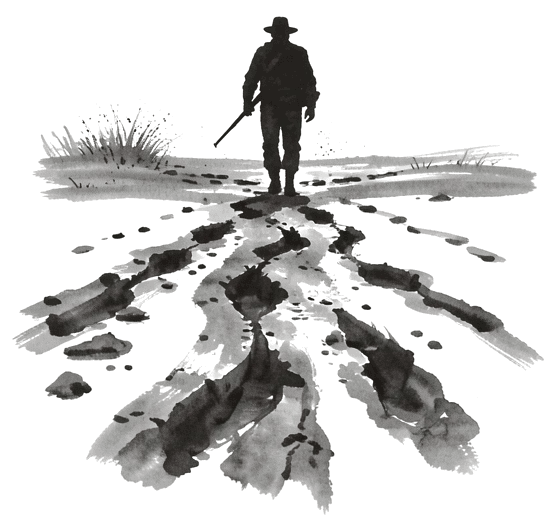
The Chase Before the Kill
Most of the meat I have eaten reached me after all the difficult parts were over.
By the time I see a chicken, it is usually on a menu, inside a packet, or already under enough gravy that identifying the original animal requires some imagination.
It no longer has an opinion about the arrangement.
Hunting is different.
At the beginning of a hunt, the food is still alive.
It may be kilometres away. You may not know exactly where it is. And, rather inconveniently, it has its own plans for the day.
It does not want to become your dinner.
That makes hunting a useful place to continue from the last few chapters.
So far I have been thinking about resistance from our side of the fight. The mountain gets steeper. The customer says no. The market moves against you. Sometimes the mind even gives that resistance a face.
With prey, none of this needs much imagination.
You move toward it.
It moves away.
You would like the distance to close.
It would prefer the opposite.
Your move · How long does the chase go on?
The part I had not really thought about was how long this can go on before the moment we normally call the reward.
My mental picture of hunting began too late.
Animal spotted.
Chase.
Kill.
Food.
That is the part we remember because it contains the ending.
But somebody had to get there first.
Leave camp.
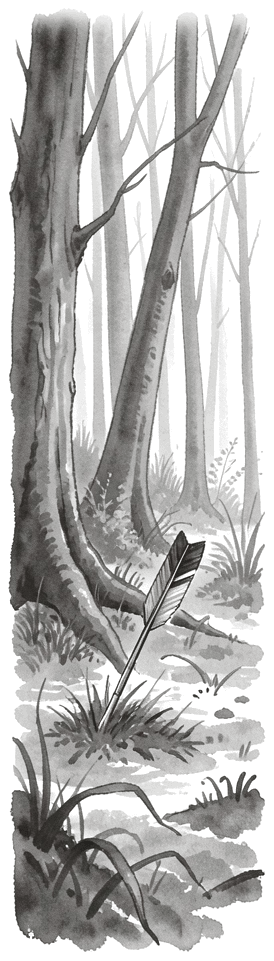
Look for signs.
Walk.
Stop.
Listen.
Choose a direction.
Discover that the direction was wrong.
Find another trail.
Get close enough to see something.
Lose it.
Start looking again.
Sometimes, after all of that, return with nothing.
Researchers studying Hadza hunter-gatherers in Tanzania have recorded adult men travelling roughly thirteen kilometres a day on average, much of that movement connected to foraging.
I don't want to turn thirteen kilometres into some magical ancestral number. People hunted differently in different environments, and humans have always found food in many ways besides hunting.
What the number did for me was put the missing middle back into the picture.
The meal is at the end of a process.
And once I saw that clearly, a slightly stupid thought experiment became useful.
Imagine the worst-designed hunter evolution could produce.
This hunter loves eating.
Really loves it.
Give him roasted meat and he is delighted. The first bite is fantastic. A full stomach is even better.
There is only one problem.
He feels almost nothing about getting there.
Searching is tedious.
Walking for an hour without seeing anything feels pointless.
Tracks on the ground mean very little to him.
If the animal disappears, he loses interest and goes back to camp.
If today's hunt fails, the thought of doing the same thing tomorrow is unbearable.
You can almost imagine somebody in camp asking:
“You're hungry?”
“Very.”
“So go hunt.”
“I will when the food gets here.”
Not exactly a great survival strategy.
That was when I realised I had been asking the reward to do something it arrives too late to do.
Eating can make food valuable. Yes. But the organism has already had to perform most of the useful behaviour before eating begins.
Somehow it has to search while the stomach is still empty.
It has to follow something that may not be there anymore. It has to spend energy before getting energy back.
And occasionally it has to fail without deciding that hunting was a terrible idea and should never be attempted again.
Animal-behaviour researchers have had language for this distinction for a long time.
They separate appetitive behaviour from consummatory behaviour.
The words are more intimidating than the idea.
Consummatory behaviour happens once the organism has reached the thing: eating the food, drinking the water.
The appetitive phase is what happens before that.
Searching, approaching, tracking, pursuing. The behaviour required to get from I need something to I have it.
I initially found the word appetitive confusing because it sounds like it should describe appetite at the dinner table.
In practice, it names the part where dinner is still somewhere else.
Our terrible hunter is excellent at the consummatory part.
It is the appetitive part that is going to kill him.
Until then I had been imagining one sequence:
work → work → work → reward.
Almost as though everything before the final outcome were simply a cost paid in exchange for the good part.
But if that middle were psychologically dead, the endpoint would often never arrive.
The animal is still somewhere ahead. The hunter still has to leave camp.
A trail has to mean enough for him to follow it, and if the trail disappears, something has to keep the possibility of searching alive.
This does not mean every kilometre has to feel wonderful.
I doubt an exhausted hunter looks at another hill and thinks, Fantastic.
Pursuit does not have to feel pleasurable in the ordinary sense.
It only has to matter enough for behaviour to continue.
That's it.
Pleasure can wait until the meal.
Motivation cannot.
Hunger obviously matters too. A hungry animal has a reason to seek food.
But hunger by itself is not a route through the landscape. The organism still has to notice, choose, follow, abandon one direction for another and sometimes start again after getting nothing.
By the time the meal arrives, all of that has already happened.
The food can reward a successful hunt.
It cannot travel backward through yesterday and make yesterday's hunter keep walking.
The scene I had been missing was not actually the kill.
It was the next morning after there had been no kill.
Yesterday the hunter walked, searched, followed signs, spent energy and came back without the thing he went out to get.
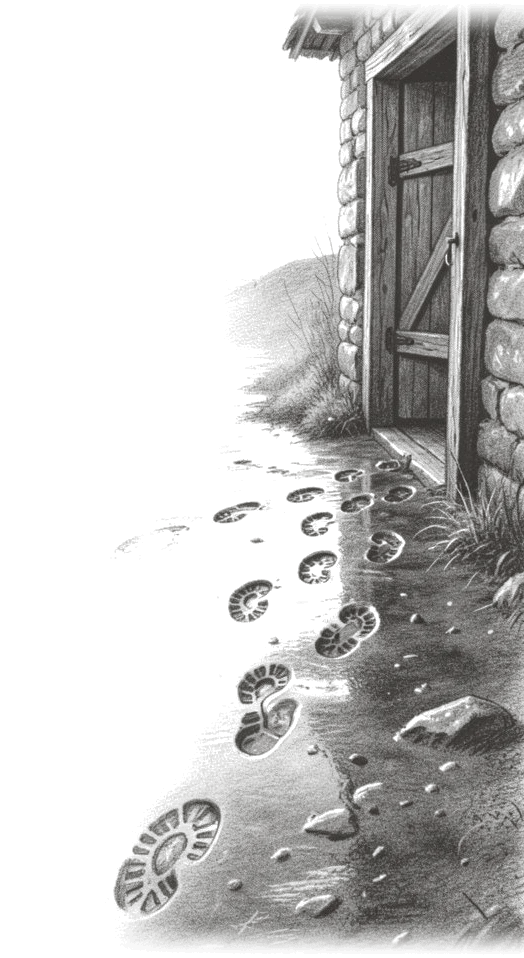
Morning arrives.
“Going again?”
“Yeah.”
“Same place?”
“No. It moved east.”
“How do you know?”
“Tracks.”
And he leaves.
No meal has appeared. Nothing has been consumed. Yesterday did not even end in success.
Still, today's behaviour has already begun.
That makes the timing much harder to ignore.
Whatever keeps the chase alive has to operate while the prey is still alive, still distant and still capable of escaping.
It has to operate before possession, and sometimes after failure.
The thing resisting you is also the thing you want.
You move toward it and it moves away.
Somewhere inside that gap, the organism has to keep caring.
Check · From memory
Which two kinds of behaviour do animal-behaviour researchers separate, and what does each cover? Say them in your head, then look.
- 1Appetitive behaviourSearching, approaching, tracking, pursuing.
- 2Consummatory behaviourEating the food, drinking the water.
Close
The reward comes at the end.
The motivation has to begin before it.
That is where dopamine enters the story.
Notes and references
[1] Wood, B. M., et al. (2021). "Gendered movement ecology and landscape use in Hadza hunter-gatherers." Nature Human Behaviour, 5, 436–446.
[2] The distinction between appetitive and consummatory behaviour has a long history in ethology and behavioural neuroscience.
From Villains, Power & Success: What Are You Fighting? by Uday Wagh. Abridged for the screen.