Part I · Maybe You Need a Villain
Chapter 4
The Mind Gives the Fight a Face
“Don't do this to me now.”
I don't know how many times I have said some version of this to a computer. Usually the timing has to be bad.
A payment page freezes while somebody is waiting. The Wi-Fi disappears thirty seconds before a call. A presentation that worked perfectly well an hour ago suddenly refuses to open.
“Come on.”
There may be nobody else in the room.
The computer is not coming anywhere. I know this. And yet don't do this to me feels completely natural.
The strange part is to me. Something hasn't merely gone wrong.
For a moment, it has gone wrong at me.
That is roughly where we ended the last chapter.
A mountain doesn't know you are climbing it. A market has no idea that you bought five minutes before the price fell. A bottle cannot wait until you are having a bad evening and then start calling from the cupboard.
Still, people talk this way all the time.
“The mountain wouldn't let us up.”
“The market screwed me.”
“The algorithm killed my reach.”
“The bottle was calling.”
We understand every one of those sentences while also knowing they are technically ridiculous.
So where does the somebody come from?
There is an old psychology experiment that makes this question much stranger. In 1944, psychologists Fritz Heider and Marianne Simmel showed people a short silent animation.
There were no actors.
No faces.
No dialogue.
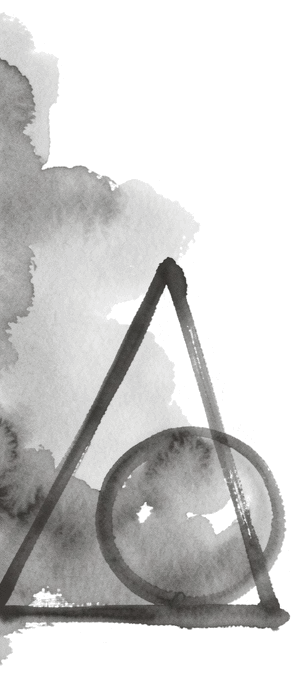
There were two triangles, a circle and a rectangle with something resembling a door.
That was basically it.
Your move
The shapes moved around one another for a couple of minutes. Afterward, the participants were asked to describe what had happened.
You could describe the film quite accurately by saying that the large triangle moved toward the smaller triangle, the circle entered the rectangle, the triangle followed, and so on.
Almost nobody did.
Thirty-three of the thirty-four people in the first experiment described the shapes as though they were living characters.
Someone was aggressive. Someone else was frightened. There was chasing. Fighting. Escaping. The rectangle became a house.
An entire little drama appeared even though physically there were only shapes moving across a screen. Even the one participant who mostly stuck to geometry apparently slipped once and referred to the large triangle as “he.”
I love that detail. Apparently remaining completely objective becomes difficult once a triangle starts behaving badly.
I watched a version of the film afterward, already knowing what the experiment was supposed to demonstrate.
It didn't help.
You know they are shapes. Then the large triangle moves toward the smaller one in a certain way and within seconds you are thinking, What an asshole.
Nothing inside the triangle has changed.
The mind has added somebody.
Psychologists use the word anthropomorphism for the broader tendency to give humanlike characteristics, emotions or intentions to things that are not human.
Animals are the obvious example.
But we do it to almost everything.
Cars become temperamental. Markets become nervous. Companies become greedy.
A phone decides that today is the day it will stop charging properly. Stub your toe on a table and for half a second the table has behaved disgracefully.
Then adulthood returns.
What interested me was that this tendency does not seem to appear randomly.
Nicholas Epley, Adam Waytz and their colleagues have studied why people anthropomorphise some things more than others. One factor they describe is our desire to understand and predict what something is going to do.
They call this effectance motivation.
The phrase sounds more complicated than the experience. Imagine a machine that behaves exactly the same way every time.
Press this button.
That happens.
Tomorrow, same thing.
You don't need to think much about the machine.
Now imagine it works on Monday, fails on Tuesday, starts working after being unplugged on Wednesday and produces a completely different error on Thursday.
Very quickly, theories appear.
Maybe it overheats.
Maybe this file causes the problem.
Maybe you have to open that application first.
Maybe it doesn't like PDFs.
There it is.
It doesn't like.
The machine now has a preference. Waytz and his colleagues found something similar experimentally. When nonhuman agents were harder to predict, people became more likely to describe them in humanlike terms. That connection makes sense to me.
Prediction is much easier when you can imagine intention.
If something has intentions, perhaps it has habits. If it has habits, maybe you can learn them.
You can start asking:
What does it want?
What makes it react?
What will it do next?
Those questions are useful when dealing with another person. Apparently the mind is willing to borrow them elsewhere.
And I think that may explain how some of the villains in this book acquire a face even when there is nobody there.
The mountain keeps refusing to cooperate. The market keeps moving after you make your decision.
An addiction appears strongest at exactly the moments when somebody is weakest. A bureaucracy produces one obstruction after another.
Thousands of unrelated events gradually begin to feel like behaviour.
Behaviour suggests intention. Intention suggests an agent.
And now instead of:
This keeps happening.
you get:
This thing keeps doing this.
That is a small grammatical change with a surprisingly large psychological effect.
The resistance has moved to the other side.
I don't think this means people literally believe markets have minds or mountains hold grudges. Most of the time we know perfectly well that they don't.
The point is that the mind seems able to use the shape of agency without fully believing in an agent.
Perhaps that is enough.
It also makes me less confident about an idea I had earlier while working on this book.
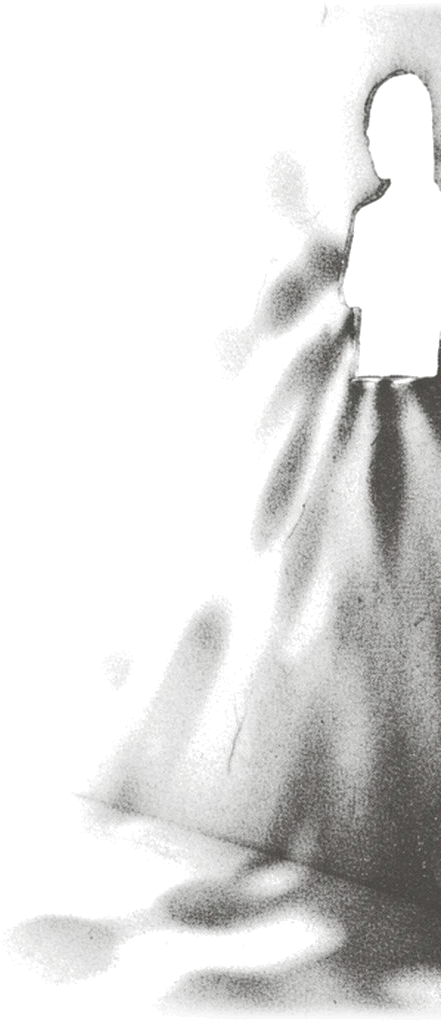
I wondered whether humans need to compress all opposition into one antagonist, almost as though the mind has a single villain-shaped slot waiting to be filled.
That now seems too neat.
People can obviously have several enemies at once. Anyone who has worked in an office has probably managed it before lunch.
But I do think something softer happens.
When opposition is messy, distributed or difficult to understand, we often give it a more manageable shape.
Sometimes one dominant opponent. Sometimes a few.
“The system.”
“The market.”
“The house.”
“The algorithm.”
“Fate.”
The labels gather complexity into something we can point toward.
Maybe that is all a villain needs at first.
Not evil.
Not a face.
Not even a living thing.
Just enough perceived agency for resistance to stop feeling completely random.
I imagined two people talking after work.
John: “My post completely died today.”
Suzie: “Again?”
John: “Yeah. Same kind of post did really well last week.”
Suzie: “The algorithm probably changed something.”
John: “That's what I'm thinking.”
Suzie: “So what are you going to do?”
John: “Figure out what it wants.”
Suzie looks at him for a second.
“You know you're talking about it like it's a person, right?”
John laughs.
“I know.”
Then he opens the analytics again.
That last part is what interests me.
He knows. It doesn't stop him.
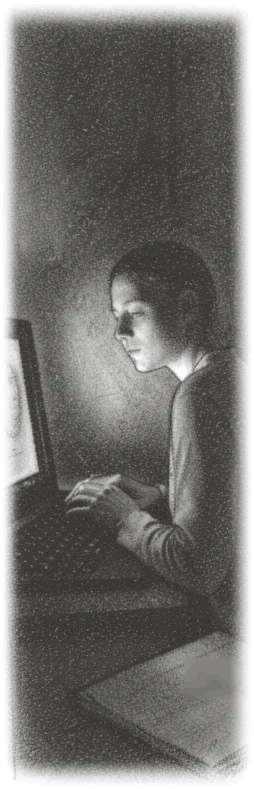
He doesn't need to genuinely believe there is a person sitting inside the algorithm deciding whether John deserves reach.
The model is already doing its job.
There is now something whose behaviour can be watched.
Something whose patterns can be learned.
Something on the other side.
And I suspect this happens constantly without us noticing.
The Heider and Simmel experiment just removes all the camouflage.
A triangle moves.
Another triangle reacts.
And almost immediately there is pursuit, fear, aggression, escape.
Out of movement comes behaviour.
Out of behaviour comes intention.
Somewhere inside that transformation, there is suddenly somebody on the other side.
Maybe the world does not always hand us villains fully formed. Sometimes it gives us resistance.
And the mind supplies the face.
Check · From memory
How does the mind get from a shape that only moves to somebody on the other side? Say the steps in your head, then look.
- 1Out of movement comes behaviour.
- 2Out of behaviour comes intention.
- 3Somewhere inside that transformation, there is suddenly somebody on the other side.
Close
A face tells you who is on the other side.
It does not tell you why anyone keeps walking toward it.
Notes and references
[1] Heider, F., & Simmel, M. (1944). "An Experimental Study of Apparent Behavior." The American Journal of Psychology, 57(2), 243–259.
[2] Epley, N., Waytz, A., & Cacioppo, J. T. (2007). "On Seeing Human: A Three-Factor Theory of Anthropomorphism." Psychological Review, 114(4), 864–886.
[3] Waytz, A., Morewedge, C. K., Epley, N., Monteleone, G., Gao, J.-H., & Cacioppo, J. T. (2010). "Making Sense by Making Sentient: Effectance Motivation Increases Anthropomorphism." Journal of Personality and Social Psychology, 99(3), 410–435.
From Villains, Power & Success: What Are You Fighting? by Uday Wagh. Abridged for the screen.