Part I · Maybe You Need a Villain
Chapter 3
What Makes Something a Villain?
I thought the obvious answer was resistance.
That explanation survived for about five minutes.
Almost everything resists us in some way. A suitcase is heavy. A staircase makes your legs hurt.
Mumbai traffic can turn a twenty-minute journey into an hour and then somehow make you feel personally responsible for having left the house.
None of these automatically becomes a villain.
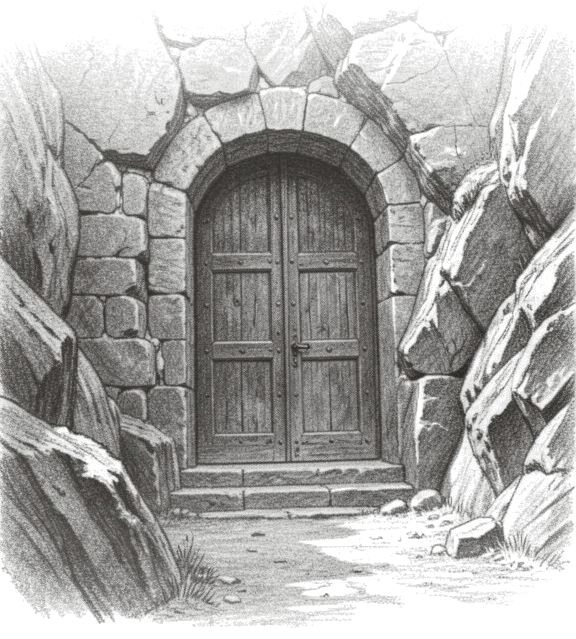
So there has to be something more specific going on. Maybe the easiest place to start is with a door.
If I push a door and it opens, there is nothing to think about.
If I push and it stays shut, something has happened. My intention met the world and the world did not cooperate.
I push harder.
Still shut.
Then I notice the tiny sign that says PULL and hope nobody saw me.
That is resistance, but I think the more useful word is pushback.
Something interferes with what you are trying to do.
The distinction matters because effort alone doesn't quite create the same experience. Carrying a heavy suitcase requires effort, but the suitcase isn't changing the situation as you deal with it.
A customer can. A boxer certainly can.
Even a piece of software can, although I realise I am already starting to give software more agency than it deserves.
You do something.
The situation comes back slightly different.
Now you have to do something else.
There is a back-and-forth beginning.
One round of that usually means very little. Suppose the same door jams every morning. By the third week, you know the door.
You lift the handle slightly before pushing because that worked yesterday. If somebody new reaches for it normally, you almost want to stop them.
“No, no. Lift it first.”
That person looks at you as if you are explaining the temperament of a horse.
But you know.
But you now arrive carrying a history.
That seems to be the second ingredient: persistence.
The resistance survives you.
Your move · The twenty-first no
One customer saying no is just a customer saying no.
After twenty, the twenty-first conversation feels different before it has even begun.
You start recognising phrases.
“Send me the deck.”
“We'll discuss internally.”
“Let's reconnect next quarter.”
The first time somebody says “let's reconnect next quarter,” you may actually put a reminder in your calendar.
By the tenth time, part of your brain translates it immediately:
No.
And now the old conversations are entering the new one.
Maybe you speak too quickly because you are expecting rejection.
Maybe you get much better because you have heard every objection already.
Maybe you become convinced that the entire industry is full of idiots who cannot recognise genius when it is presented to them in a twelve-slide PowerPoint.
That possibility should not be underestimated.
Either way, the resistance has lasted long enough to start changing the person encountering it.
I think that is why persistence matters more than simple repetition.
A song playing twenty times in a shop is repetitive. An obstacle surviving twenty attempts has begun accumulating history with you.
Still, you can have history with something and stop caring completely.
I could lose fifty games of chess to Magnus Carlsen and I doubt a great rivalry would emerge. At some point I would mostly be wondering why Magnus Carlsen had cleared his schedule for this.
I know the ending. That changes things.
The opposite is also true. If I am playing someone I can beat while replying to WhatsApp messages, there isn't much of a contest there either.
Somewhere between those extremes sits uncertainty.
There has to be a believable version of events in which you win, and another in which you don't.
That middle zone seems to create tension.
If something is so far beyond you that defeat is certain, eventually there may be no fight there either. I do not wake up furious every morning because I have failed to become the heavyweight champion of the world.
There is no live contest. Maybe this helps explain why certain problems get under our skin much more than others.
They sit in a very irritating range.
Not easy enough to dismiss.
Not impossible enough to abandon.
Just possible enough that you keep coming back.
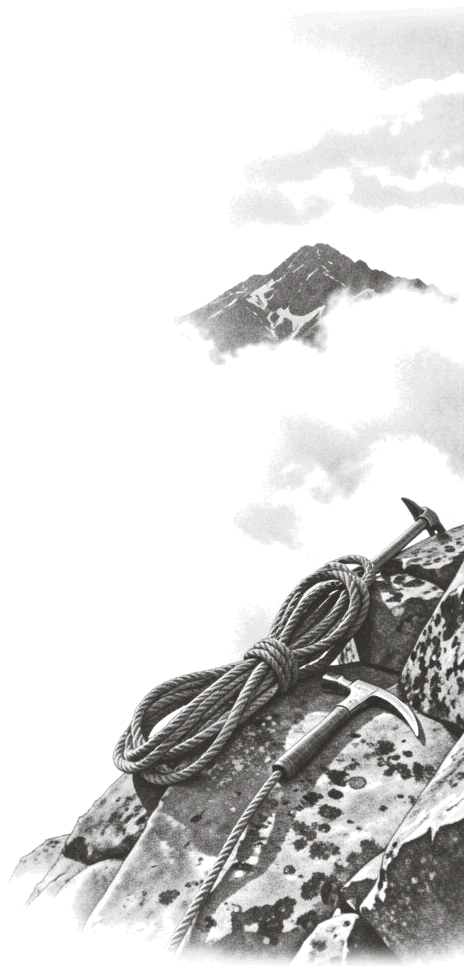
This is one reason I keep returning to mountains, even though the poor mountain has already done quite a lot of work in this book.
A climber can prepare properly.
Train for years. Buy the right equipment. Study the route. Arrive fitter than last time.
Then the weather changes.
Imagine being close enough to see where you are trying to go and hearing the guide say:
“We turn around.”
“We're this close.”
“I know. We turn around.”
There is nobody to appeal to.
Nobody has cheated. The mountain hasn't broken an agreement.
You can do everything reasonably well and still be forced down.
That kind of no has weight.
But even pushback, persistence and uncertainty don't explain why this particular mountain matters to this particular person.
Most of us can look at Everest in a photograph and think, beautiful, before returning to lunch.
For someone who has spent years training, already failed once, rearranged work, spent more money than they would like to calculate and missed time with family to come back again, the same mountain is carrying something else.
There is more sitting behind the attempt.
That is where stakes enter.
Sometimes the stakes are obvious. Money. Health. Physical safety.
Sometimes they are embarrassingly small from the outside.
Pride is enough.
A promise to yourself can be enough.
Humiliation can certainly be enough.
You can also attach a huge amount of meaning to something nobody else realises is important. That part fascinates me.
Two people can want exactly the same promotion. One wants the extra money. The other wants to walk into a room carrying the title because five years ago somebody said:
“You're not senior enough for that.”
Same promotion.
If they both get it, I don't think they receive the same thing.
One gets a better job.
The other gets an answer.
Or hopes to.
That distinction gets messy very quickly because now the villain is no longer just out there in the obstacle.
Some of it is coming from what we have attached to the outcome.
The same boss can be one employee's lifelong enemy and somebody else's mildly irritating manager.
The same competitor can occupy a founder's thoughts for three years while the competitor, slightly insultingly, barely knows the founder exists.
The same disease can be described by one person as something they are fighting and by another person in completely different terms.
That last example is worth being careful with.

Some people genuinely find battle language useful when dealing with illness. Others hate it, partly because if treatment stops working, “fighting” can make deterioration sound like a failure of courage.
So the resistance itself cannot be deciding the role.
The person is involved in constructing it too.
And then there is one final part of this that I nearly missed because I was concentrating so much on what stops us.
What happens when we start getting through?
Imagine two people standing on top of the same mountain.
One climbed.
The other arrived by helicopter.
Same summit. Same view. If the purpose were simply to occupy that coordinate, there should be no meaningful difference between the two.
Obviously there is.
Some of the value has become trapped inside the route.
The climber had to keep gaining ground from conditions that could take the attempt away completely.
A hundred metres mattered because those hundred metres were not guaranteed.
That gives us earned progress.
Progress feels different when resistance could have prevented it.
There are tiny versions of this everywhere.
Walk into a shop and receive an automatic ₹500 discount. Nice.
Now imagine bargaining for twenty minutes.
“Sir, this is already the best price.”
“You said that ten minutes ago.”
“Yes, and it was also the best price ten minutes ago.”
Eventually another ₹500 comes off.
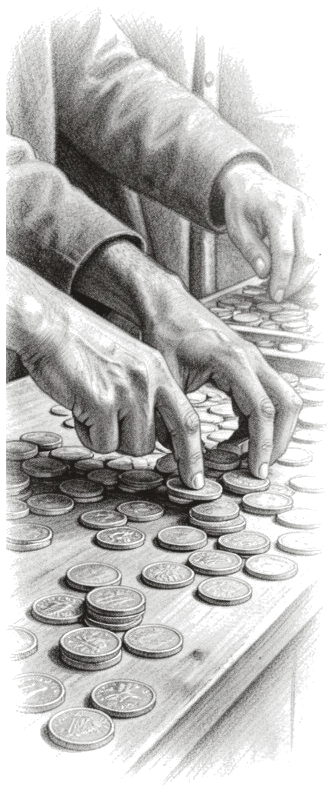
Financially, nothing magical has happened. You have exactly the same ₹500 you would have saved with a coupon.
Yet you walk away feeling strangely pleased with yourself.
You got the other side to move.
You may even tell someone later. Nobody calls a friend to describe an automatically applied coupon.
There was no story in it.
Maybe difficult crafts have a little of this too. The musician finally plays the passage she has been getting wrong all week.
The programmer finds the bug at two in the morning and stares at one stupid misplaced character wondering how it managed to ruin six hours of his life.
“That's it?”
Yes.
That's it.
And somehow fixing that one character feels fantastic.
The successful result still contains all the failed attempts. That may be why it weighs more.
So these are the five things I would keep for now:
Pushback. Persistence. Uncertainty. Stakes. Earned progress.
I don't think they are a formula.
I definitely don't think we should be scoring our boss out of five on each and calculating a Villain Rating.
They are closer to clues. And they already have exceptions.
One act of betrayal can create an enemy immediately, so persistence does not always need months or years.
Some people become more determined as the odds approach impossible, while others sensibly leave.
Sometimes a challenge matters enormously for a while and then, almost overnight, stops mattering at all.
People change.
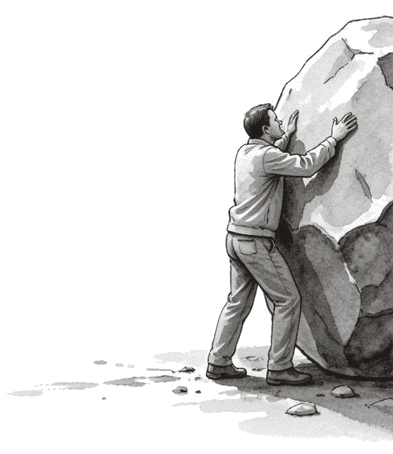
The story changes with them. But when enough of these things are present, I think we can at least understand why some forms of difficulty begin to feel more personal than others.
Something is pushing back.
It keeps surviving.
The outcome is uncertain enough to hold your attention.
Something you care about is caught inside it.
And every bit of progress reminds you that the resistance had previously refused to move.
That gets us close to an antagonist.
It does not explain the strangest part.
A boxer can genuinely answer you. A customer can actually say no.
But a mountain cannot decide that today is a bad day for you.
Cancer doesn't know your name.
“The market” is not sitting somewhere watching your account and waiting for you to buy before collapsing.
A bottle cannot whisper. Yet people say:
“The mountain wouldn't let us up.”
“The market is screwing me.”
“The cancer came back.”
“The bottle was calling.”
Nobody hears those sentences and says, “Excuse me, mountains do not possess intentional states.”
We know. We also know exactly what the person means.
Check · From memory
What are the five clues this chapter kept? Say them in your head, then look.
- 1Pushback
- 2Persistence
- 3Uncertainty
- 4Stakes
- 5Earned progress
Close
That may be the real clue.
Somewhere between:
“It didn't work.”
and:
“Why are you doing this to me?”
the mind has added somebody.
Where did they come from?
From Villains, Power & Success: What Are You Fighting? by Uday Wagh. Abridged for the screen.