Part I · Maybe You Need a Villain
Chapter 2
Maybe You Need a Villain
There is a moment in The Dark Knight that I have always found funny.
Batman asks the Joker why he wants to kill him. The Joker laughs. He doesn't. What would he do without Batman?
Then he says, “You complete me.”
It is a ridiculous sentence coming from a murderous man wearing face paint. It belongs in a romantic film, which is probably why it works so well.
But there is something uncomfortable hiding inside the joke.
What would the Joker do without Batman? More interestingly, what happens to Batman without the Joker?
Gotham being Gotham, I am sure another criminal would turn up by Tuesday, so I don't mean this too literally. What interests me is the relationship itself.
We usually think of the villain as the thing preventing the hero from getting what he wants.
Remove the villain and life should improve immediately. The road is clear. Everybody can finally go home.
Yet in many stories the opponent ends up doing something else too.
It gives the hero something to be a hero against.
Take that away and you haven't only removed a problem. You may have removed part of the role.
I kept thinking about this after finishing the last chapter because of the question we ended with:
What are you fighting?
It feels different from asking what someone wants.
Ask someone what they want and the answers are usually familiar.
A better job. More money. A house. A business. To lose weight. To retire.
But ask someone what they are fighting and you can occasionally reach somewhere else entirely. Maybe it is poverty. Maybe it is an illness.
And sometimes, after a little hesitation, you discover that a perfectly respectable forty-year-old life is still partly organised around one sentence spoken when the person was sixteen.
“You are not smart enough.”
“You'll never make it.”
“Your brother was always the talented one.”
The strange thing about these sentences is how long they can live.
The person who said it may have forgotten by dinner.
Twenty years later, the other person is still replying.
I have one of these myself. Mine came from an astrologer. I will get to it.
Your move
Perhaps he has built the company now. Bought the house. Made the money. He is standing inside the thing that was supposed to prove them wrong.
Has he won?
I genuinely don't know how you measure that kind of victory.
Suppose the person who doubted him never notices. Worse, suppose they are dead.
What happens to an argument when only one person is still having it?
I am not suggesting every ambitious person is secretly conducting a fight with their childhood.
But desire and defiance do seem different.
“I want to make ₹10 crore because I want my family to be secure” is one kind of ambition.
“I'll make ₹10 crore because you thought I couldn't” may produce exactly the same bank balance while doing something completely different inside the person.
One has a destination.
The other seems to have an opponent.
That distinction kept bothering me.
Suppose I decide to run ten kilometres. That is a goal.
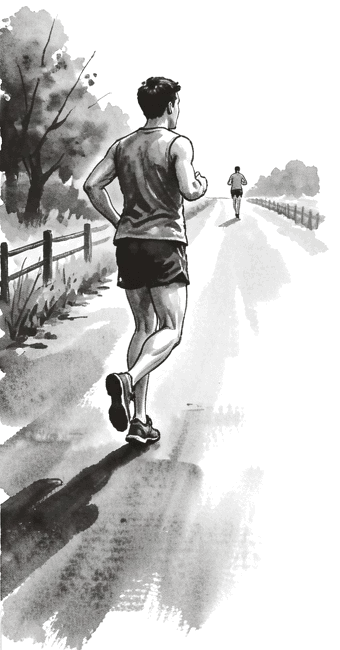
Now imagine that every Sunday I run with a friend who is only slightly faster than me.
Not properly faster. That would actually be easier to accept.
He finishes perhaps two hundred metres ahead. Close enough that I can still see him.
Tuesday's run now feels different.
I check my pace more often. I go out on Thursday even though I don't particularly feel like running. If he sends me his timing, I pretend not to care and then look at it three times.
Nothing important about running itself has changed.
The road is the same. My lungs are the same. Ten kilometres remain ten kilometres.
But something has entered the experience that wasn't there before.
The resistance now seems to have a position.
It is over there.
I have been trying to find a word for this quality, and the best I have so far is againstness.
It is not a beautiful word. Maybe someone will eventually send me a better one.
What I mean is the difference between something being hard and something feeling as though it can stand against you.
It can stop you.
It can get there first.
It can win.
You see a slightly ridiculous version of this with fitness all the time.
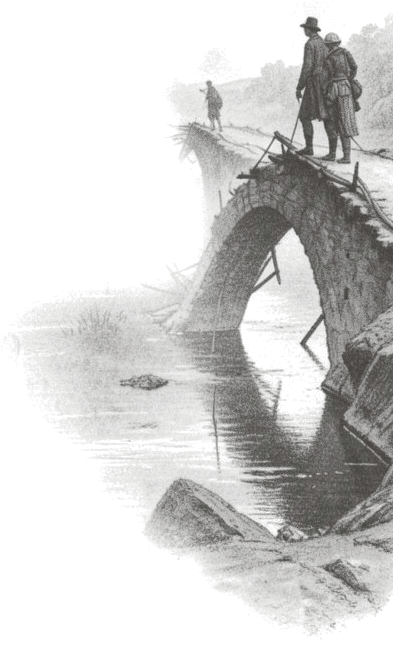
A doctor tells someone for three years that he should lose weight. He agrees every time. Perhaps he buys shoes in January. Maybe even an annual gym membership, which is a particularly optimistic financial instrument.
Nothing much happens.
Then, at a wedding, someone he has not seen for five years looks at him and says, “You've become fat!”
Six months later he has lost fifteen kilos.
Nothing medically important changed at the wedding. The doctor had probably given him much better reasons to lose weight, and certainly more accurate ones. Yet one careless comment from someone he knew could do what years of sensible advice had failed to do.
The goal was already there.
What appeared at the wedding was someone to answer.
I started wondering whether the same thing happens in places where the stakes are much larger.
Michael Jordan provides an almost comically pure example.
In March 1993, Washington Bullets guard LaBradford Smith scored 37 points against Jordan's Chicago Bulls.
A story then went around that Smith had walked past Jordan afterward and said, “Nice game, Mike.”
Jordan apparently took this as an insult.
The teams played again the next night. Jordan scored 36 points in the first half and finished with 47.
Years later, he admitted that Smith had never said it.
Jordan had made the story up.
I love this because it is so unnecessary.
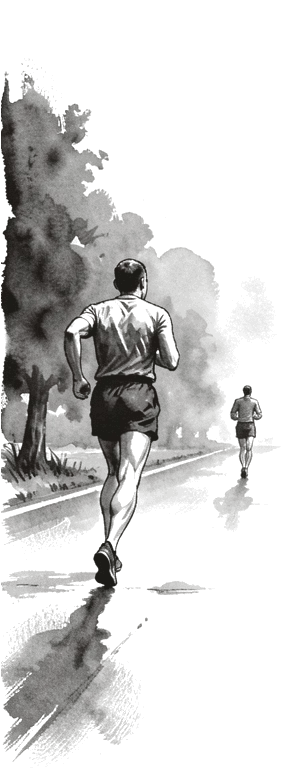
This was Michael Jordan. He was not short of competitive success. Nobody needed to explain basketball to him. He did not require encouragement to work harder than everybody else.
And yet reality apparently failed to irritate him enough that evening, so he supplied the missing irritation himself.
Why?
What did the invented insult give him that the actual basketball game did not?
There was already a target.
There was already difficulty.
There was already competition.
Then a tiny story appeared inside the larger one: somebody had disrespected him. Suddenly the next game was also an answer.
That is roughly where the hypothesis of this book begins.
Maybe humans do not merely need goals or challenge.
Maybe some of us, under some conditions, become unusually engaged once resistance acquires this feeling of being on the other side.
Something can deny you.
Something can embarrass you.
Something can be proved wrong.
Something can beat you.
And you can beat it.
I am going to call that thing a villain.
The word is deliberately imperfect.
A villain normally implies evil. What I mean does not.
Everest is not evil.
A market is not evil.
A bottle of whisky sitting in a cupboard is not plotting anything.
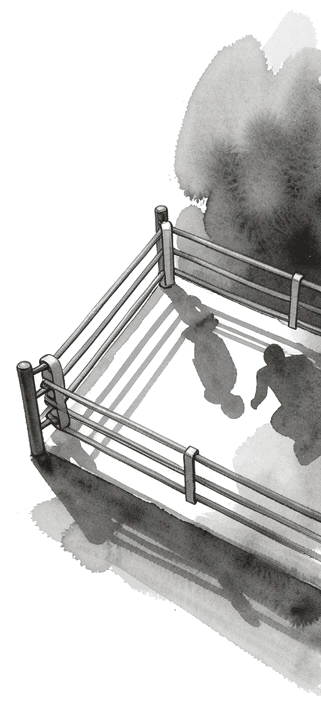
Yet climbers talk about conquering mountains. Traders spend years trying to beat the market. Someone trying to stop drinking may describe alcohol almost as though it waits for the precise moment when they are weakest.
The thing outside the person does not necessarily need intentions.
Something seems to happen in the relationship with it.
Perhaps opponent would be the cleaner word.
I keep coming back to villain because it carries more of what I am interested in. An opponent belongs inside an activity. A villain can begin to organise the story around itself.
That distinction is still rough. I expect we will have to improve it.
There are also obvious limits to the idea.
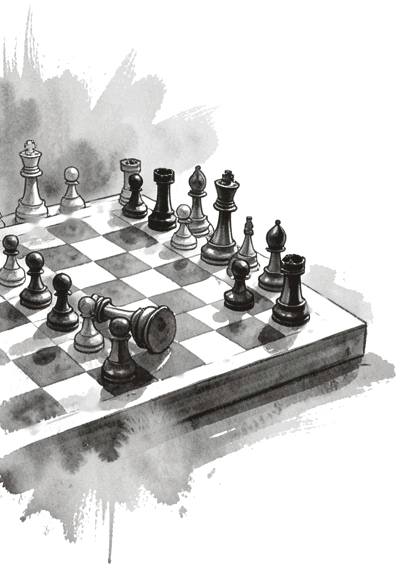
Plenty of meaningful activity does not require an opponent at all.
So I don't want to quietly redefine every difficult or meaningful activity as a fight.
There seems to be a particular kind of engagement that opposition can create.
You notice it when failure becomes personal enough that somebody wants another attempt, or when resistance makes the eventual outcome matter more rather than simply making the work unpleasant.
Why should an opponent have that effect?
There is at least one clue from psychology that I find surprisingly useful here.
Psychologists Daniel Sullivan, Mark Landau and Zachary Rothschild ran a series of studies around what they called enemyship.
One of their stranger findings was that, under certain conditions, thinking about an influential enemy could actually increase a person's sense of control.
My first reaction was that this sounded backwards.
Surely if life already feels threatening, adding an enemy should make it worse.
But consider the alternative.
Something in your life is going badly and there is no clean explanation.
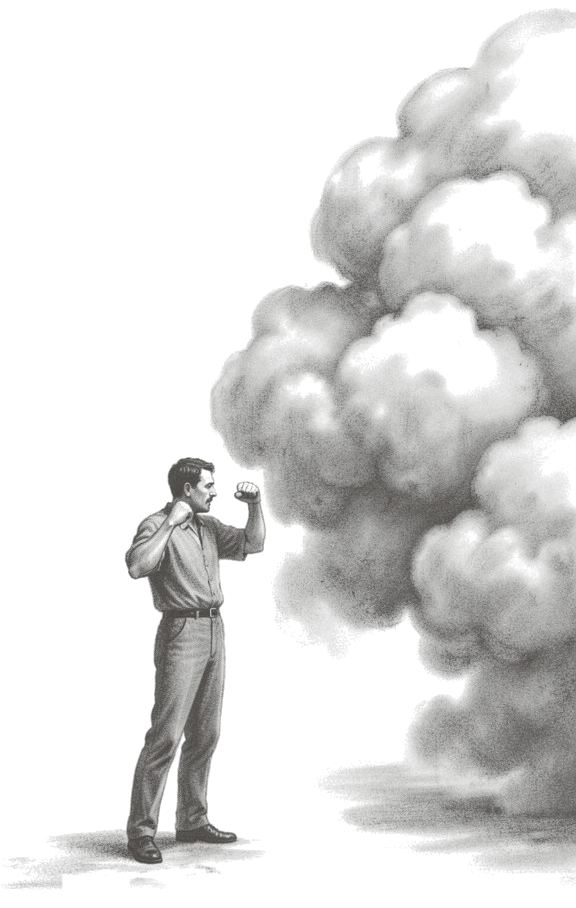
Part of it is luck. Some of it may be your own decisions. Your industry changed at exactly the wrong time. Somebody else got an opportunity you didn't. A few institutions made choices independently of each other. Perhaps one person treated you unfairly. Perhaps another person simply didn't think about you at all.
The honest explanation may be a cloud.
Human beings are not always very good at fighting clouds.
Now imagine compressing the whole thing into two words:
the system.
It may be a terrible explanation.
“The system” can hide your own mistakes, bad luck, unrelated institutions and several people who have never even spoken to one another.
But psychologically it is much easier to deal with than a cloud of causes.
At least now there is something over there.
You can be angry with it. You can try to escape it. You can imagine beating it.
A messy world has acquired an opponent.
This does not mean people mechanically invent a new enemy whenever an old one disappears. Research after the collapse of the Soviet Union, for example, did not find a neat universal process in which Americans simply transferred hostility to the next available foreign enemy.
I am glad it didn't.
Human behaviour rarely behaves as cleanly as a framework would like.
What the enemyship work suggests is more modest: under some circumstances, locating opposition in an identifiable enemy can make disorder feel more understandable.

That interests me because it points toward something we have not yet explained.
Where does the identifiable enemy come from?
Most difficult things never become villains. A staircase is usually just a staircase. A bad month can remain a bad month. Another runner on the road may mean nothing to you at all.
Then, occasionally, something changes.
A mountain becomes the mountain.
A market becomes something a trader wants to beat.
An addiction can begin to feel almost separate from the person fighting it.
Thousands of institutions, incentives and strangers somehow collapse into the system.
What has the mind done in each case?
The external world is still complicated. The mountain is still rock. The market still contains millions of decisions. “The system” still does not sit in one office making plans.
Yet the opposition starts feeling much simpler than its actual causes.
It begins to acquire a shape.
Sometimes even a personality.
And once that happens, a person can face it.
Check · From memory
What can the thing the author calls a villain do? Say the four in your head, then look.
- 1Something can deny you.
- 2Something can embarrass you.
- 3Something can be proved wrong.
- 4Something can beat you.
Close
I think that transformation matters.
Because before we ask why people might need villains, or what they get from defeating them, we have to understand something more basic.
How does resistance become an antagonist in the first place?
Notes and references
[1] The Dark Knight (2008). Directed by Christopher Nolan. Warner Bros. Pictures.
[2] Wilbon, M. (1999). "Needing to Play the Game Just Like Mike — Or Not at All." The Washington Post, January 13, 1999.
[3] Sullivan, D., Landau, M. J., & Rothschild, Z. K. (2010). "An Existential Function of Enemyship: Evidence That People Attribute Influence to Personal and Political Enemies to Compensate for Threats to Control." Journal of Personality and Social Psychology, 98(3), 434–449.
[4] Murray, S. K., & Meyers, J. (1999). "Do People Need Foreign Enemies? American Leaders' Beliefs after the Soviet Demise." Journal of Conflict Resolution, 43(5).
From Villains, Power & Success: What Are You Fighting? by Uday Wagh. Abridged for the screen.