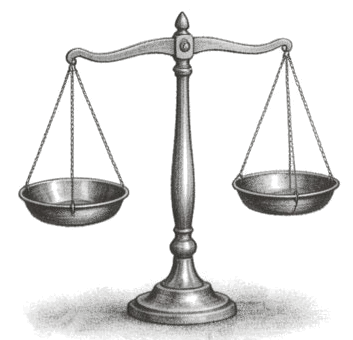
Part VII · Which Villain?
Chapter 13
Some Enemies Are Better Than Others
We have become quite good at finding enemies.
The more difficult question is whether they deserve the position.
A person who insulted you can occupy the mind for years.
A disease affecting thousands of strangers may barely enter it. The first is personal. The second is important. Our attention does not always distribute itself according to importance.
Human enemies come with almost everything needed for a compelling fight. Faces, voices, memories, intentions. They can answer, refuse and sometimes humiliate us. We do not need to borrow much agency for them.
But the fight can begin rewarding things we would otherwise dislike in ourselves. Their mistake feels good. Their difficulty becomes evidence that we are winning.
Compare a fight against a human population with work against malaria. Both can organise people around an opponent.
Only one requires the people being targeted to become less safe as the fight succeeds.
Against disease, the human beings are the people for whom we want the resistance to yield.
The target can slide from the absence of understanding to the people lacking it.
"I am fighting ignorance." Fine. Now listen closely to how the person speaks about people who do not know what he knows.
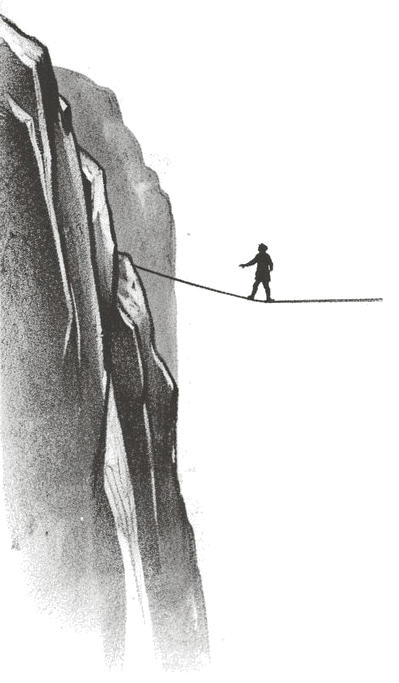
So a better enemy has to be more than a better label.
The desired defeat should leave people better off. A scientific question can do this. The failed explanation resists; the person trying to improve it can remain curious.
A difficult craft can do it too. The standard refuses the easy attempt. Other practitioners may help you meet the resistance rather than become targets for resentment.
The emotional temperature changes. The fight does not need contempt to remain alive.
I think that is the constructive possibility. Keep the part of opposition that makes effort meaningful. Change the thing whose defeat we are trying to produce.
A question followed for years acquires history. A difficult passage can be irritating enough without being evil. The work can develop stakes as the person develops a relationship with it.
Your move
I think of this as the disappearance test. If malaria vanished, good. If ignorance shrank, good.
If the rival apologised and stopped provoking us, would we be glad? Or would something in us begin looking for the next offence?
The answer tells us whether we were trying to improve the world or mostly keep a fight available inside it.
That is how to choose on paper.
It is not how I got my first villain.
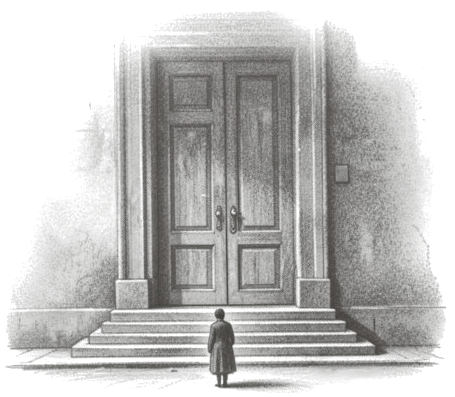
Make Fate the Enemy
When I was starting out and went into fintech, an astrologer looked at my horoscope and told me, to my face: you cannot do this.
I said, let me prove you wrong.
That was the push.
Raising the money, building the app, all of the initial effort came from wanting to prove an astrologer wrong. The app became SuperPay. It reached more than 60,000 users and a million transactions, and it was acquired.
Here was someone with no authority over fintech delivering a verdict about whether I could build a fintech company.
The prediction had become something on the other side. Something I did not want to let have the last word.
That is an unusual opponent. Fate.
You cannot physically attack it. It has no office where you can complain. Yet a verdict about your future can feel more personal than a competitor's refusal. The competitor might have made a mistake. Fate claims to have decided before you began.
For someone who accepts the prediction, that can create surrender.
For someone who reacts differently, the same claim can create a fight.
The future has said no. Perhaps I can do something that contradicts it.
But there is a trap in making fate the opponent. A large, complicated attempt can fail.
A business can fail for ordinary reasons that have nothing to do with stars.
Now consider someone who has made the whole attempt a test of a horoscope. Failure arrives. "See? It was right."
The person has given the prediction an opportunity to claim a result it cannot actually explain.
That makes me think smaller contradictions may sometimes be more useful than one enormous challenge.
Not because small acts cannot fail. Because their outcomes can remain specific enough to understand.
Take a verdict like "you are not creative." The answer need not be becoming a celebrated artist.
Make something. A bad drawing is still a thing made rather than a life decided by a label.
If the verdict says someone cannot learn a practical skill, learning one part creates a small fact the verdict has to contend with.
This is micro-defiance.
A small action that refuses the finality of a limiting sentence. The point is to weaken a verdict's authority, not manufacture more of it.
There is also a stage at which the opponent should become unnecessary.
If every useful thing I do is still an answer to the astrologer, the astrologer has remained oddly influential.
The better result would be having enough experience of acting that the old verdict becomes less interesting.
I can begin because there is something worth attempting.
The chart does not need to be consulted, obeyed or dramatically disproved each time.
Small cracks in a fatalistic story may leave more room than one heroic confrontation.
Eventually there may be enough room to stop arguing with fate and get on with the work.
Remember Jordan from Chapter 2? He invented the insult he answered.
The astrologer handed me mine ready-made.
Both supplied the same thing: somebody on the other side saying it could not be done.
Choose Your Villain
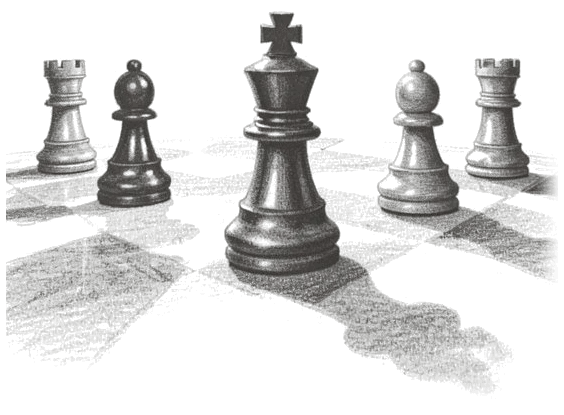
We can make a chess game quite unsatisfying in either direction.
Play someone you can beat while thinking about lunch. Or play someone so much better that you spend most of the game discovering there was a threat three moves ago.
One game supplies very little resistance. The other may supply very little believable possibility of overcoming it.
The opponent is real in both. The useful relationship is not.
Now put the first player against a friend who wins slightly more often than he does.
He loses on Sunday. On Tuesday he is still thinking about the mistake that turned the game.
He can see an alternative move now. It gives him something to try next Sunday. The same resistance has become much more useful because he can picture it yielding.
That seems like one of the properties a good villain needs.
Difficult enough to resist.
Possible enough to make another attempt matter.
Remember the five clues from Chapter 3?
Pushback.
Persistence.
Uncertainty.
Stakes.
Earned progress.
Those told us when something had become a villain.
They can also help us choose one. Let me add two more.
The fight has boundaries, so it does not follow you home.
And it does not demand that you hate the other person to keep going.
I said in Chapter 3 that we should not score our boss out of five. I still think so.
But you can ask these seven questions about any fight you are in.
Now remove the player's ability to recognise improvement. He studies and practises, but every game feels like the same inexplicable loss.
Visible progress does not have to mean winning immediately. It means the person can find evidence that an attempt changed something. The resisting thing has moved a little.
There is a further condition. They can stop.
The board does not follow them home demanding that every disagreement be settled by the score.
Sunday can be disappointing without making Monday proof of worthlessness.
The fight has boundaries. Those boundaries let it become intense without becoming the whole person.
Then, after a year, perhaps one player becomes much stronger. The old game no longer asks the same question.
A healthy opponent has to evolve, or the person needs permission to choose another one.
We have moved from "find something difficult" to a much more particular arrangement.
Something that matters to you.
Something that can push back.
Something you can meet concretely and watch change.
Something whose defeat is possible, and whose refusal does not become a verdict on your whole life.
Finally, something that does not require turning other human beings into lesser creatures.
The friend is trying to beat you. He is also helping create the kind of game you both came to have.
If the only way to keep the fight exciting is to begin hating him, the design has lost something essential.
Check · From memory
In the chess game, what does a good villain need to be? Two things. Say them in your head, then look.
- 1Difficult enough to resist.
- 2Possible enough to make another attempt matter.
Close
A good villain gives agency somewhere to grow.
The fact that an enemy can make us move is only the beginning of choosing one.
From Villains, Power & Success: What Are You Fighting? by Uday Wagh. Abridged for the screen.