Part VI · Where the Fight Still Works
Chapter 12
Let's Reconnect Next Quarter
One place still runs the hunter's day.
"Send me something." A salesperson can spend the next hour replying to those three words. The customer has not bought anything. They may never buy anything. But the encounter has moved from silence to a possible next step.
It reminds me of the hunter's track. Not food. Possibly the route toward food.
Sales makes these changes unusually frequent. Find someone who might need the thing. Work out whether they really do. Get a conversation.
Discover that the person you are talking to cannot decide. Find the person who can decide. Then discover that the budget has gone elsewhere. "Let's reconnect next quarter." Our old friend from Chapter 3.
But the salesperson who remains interested has another call to make.
The refusals are consequential without necessarily making the whole field impossible. There is still a plausible yes somewhere.
This is why the customer does not need to be hostile for sales to feel like pursuit. The customer has other priorities, other options and an independent opinion about whether the proposal deserves money.
Now add competitors. Territory. A visible target. Perhaps a leaderboard carrying the name of a colleague who is only slightly ahead. And then there is the customer whose name has appeared in the pipeline for months. "Any news?" "Procurement." An entire emotional condition compressed into one department.
Then the agreement comes through.
The salesperson knows exactly why it feels different from receiving the same amount as a surprise gift. This one contains the calls, the objections, the competitor and all the mornings when there was still no agreement.
Listen to the words the profession uses: hunting, killing it, closing, pipeline, territory, target. It is not a metaphor. The hunter's day runs there, inside the quarter.
Your move · Does the next quarter start from zero?
Then sales does something particularly interesting. The quarter resets. You can win, enjoy winning, and have a defined period after which the work offers you prey again.
You keep some gains too — experience, trust, existing relationships. The loop is not necessarily starting from zero. The fight returns to someone more capable of having it.
For someone who likes it, sales provides something a vague instruction to "be successful" cannot.
A particular person to contact. A particular resistance to understand. A result that can happen. And after the result, a way of beginning again.
Which makes what we often do to the best of them rather strange. We promote them away from it.
Promoted Out of the Fight
The promotion can arrive with a perfectly sincere sentence.
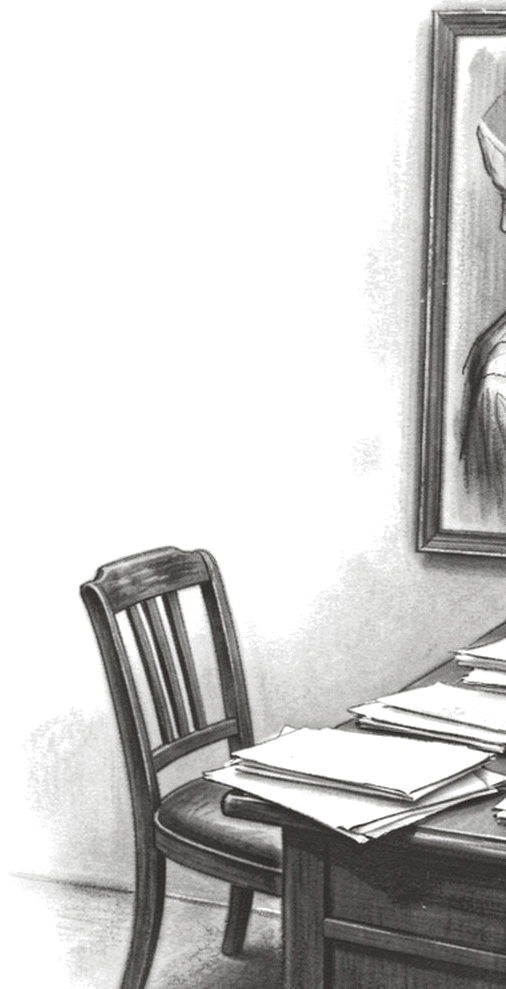
"You've earned this." More money. A better title. The salesperson has done well. Now she is a manager. Next Monday, instead of speaking to the customer who has been resisting her proposal, she attends a meeting about everybody else's proposals.
Tuesday brings forecasting. Wednesday brings a hiring problem.
The number still matters. Her ability to change it now works through people doing the thing she used to do. This is a different job. It may be a better job for her. It may also remove the part of the old job she liked most.
What bothers me is how easily we assume those two things must be the same because the new title is higher. We took the hunter off the hunt and gave him a seat at camp, counting other people's meat.
An excellent engineer becomes a manager. A creator becomes responsible for administration. A founder eventually spends much more time supervising the machine than building the thing that first made the machine worth having. Power can increase while direct pursuit decreases.
The person gets closer to the top and further from the encounter that made the work engaging.
There is research on a neighbouring problem. Firms can promote strong sales performers without giving enough weight to other characteristics that better predict managerial performance. Being excellent here does not settle whether you will be excellent there.
But I am interested in a second question as well. Even if you could learn the new job, would you want the activity it contains? The manager may miss closing an agreement rather than lack the ability to organise a team. Competence and engagement can part company. And saying so becomes awkward.
"How's the new role?"
"Good."
"More responsibility?"
"A lot."
"You must be happy."
There is the answer expected before she has quite worked out her own.
She has been rewarded. The reward is not supposed to feel like loss.
Yet an hour helping with a difficult customer call can suddenly make her feel like the person everyone thought the promotion would celebrate.
Management has its own hunts. Helping someone become capable can be deeply satisfying. Making a team work gives a different kind of power. But the person has to discover whether that kind of resistance matters to them. We cannot decide it by pointing at the salary.
The promotion trap is not simply being promoted beyond competence. It can be being promoted beyond contact with the thing that made the competence come alive. The career has progressed. The activity that supplied the fight has quietly disappeared from the calendar.
If the job can take the fight away, where do people go to get it back?
Same Time Sunday?
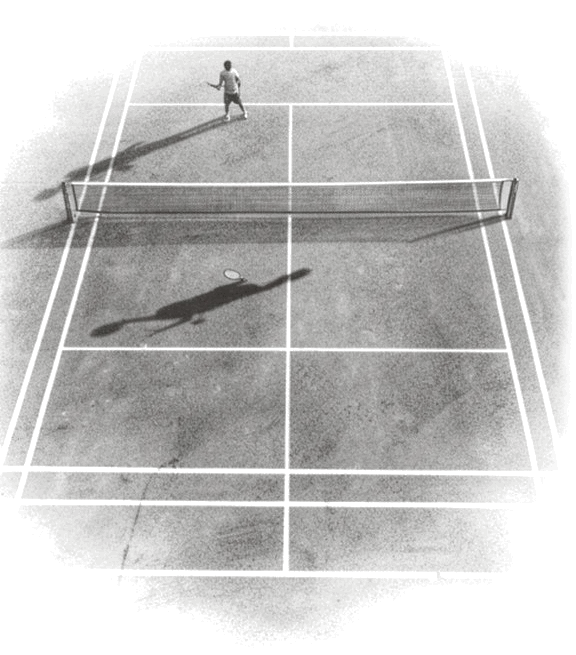
They book a court.
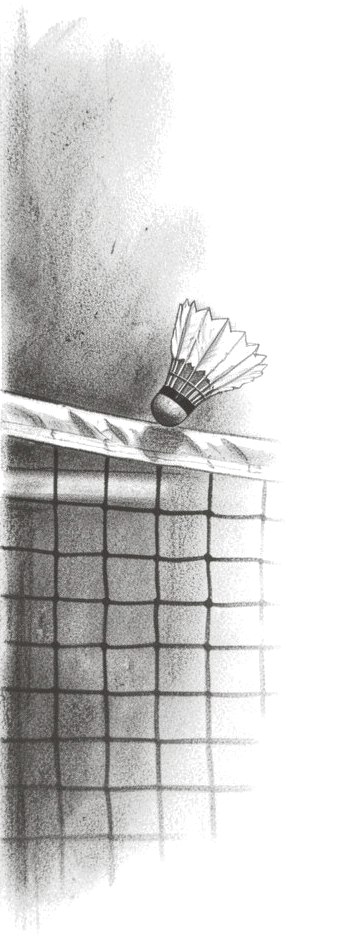
There is a point in a close game when you become extremely interested in the other person's mistake. The shuttle catches the net. Good. Then you remember that the other person is your friend. Still good.
On court, for these few minutes, you would like your friend to fail at something he is sincerely trying to do. Afterward you might give him a lift home.
Sport lets these two relationships coexist without making either particularly mysterious. In most other settings, wanting somebody to lose can gradually change how you see them.
On court, you can want the loss intensely without needing an account of why the person deserves suffering. The game has already supplied the reason.
We agreed to play. There are lines on the floor. A net. A score. Permitted moves. An ending.
Within that arrangement, my friend's resistance helps make my effort meaningful. If he stops trying, the point becomes easier to win and less satisfying to win. I need him to stand against me properly. That is a peculiar form of cooperation. We cooperate in making the opposition real.
Now let the game get close. The next point matters because there is a believable version in which either of you loses it. Uncertainty. And because this is the third game after you each won one. History.
Then the match ends.
The score has settled one question. It has not settled whose life is worth more. You shake hands. Maybe the loser says, "Again on Sunday." The winner says, "If you want."
Very casually, of course. Sunday has acquired a purpose. The opponent renews without needing permanent hostility.
There is a design lesson here. A meaningful fight can be bounded tightly enough that both participants remain larger than their roles in it. You are the opponent during the game. You are my friend during the drive.
Sport sometimes loses that distinction. A scoreboard becomes a judgement on a child's worth. Supporters turn a rivalry into hatred. But those failures show us what the container was doing. The rules and the ending allow opposition to become intense without demanding that it take over everything else. The handshake is not an ornamental gesture pasted onto the fight. It helps return both people to the larger world.
The runner from Chapter 2 knows this too. His friend finishes two hundred metres ahead, every Sunday. The race never ends. It only resets.
And so we return to the larger world, where one can say, with no real contradiction:
"You were very annoying today."
"Same time Sunday?"
"Yeah."
Nobody Wants the Cheat Code
Golf has an extremely easy solution.
Pick up the ball.
Walk to the hole.
Put it in.
This is an excellent way of putting a ball in a hole and a terrible way of playing golf.
The problem is that we were pretending the outcome was the whole activity. The awkward distance, the clubs and the restrictions are doing something the easy solution removes.
They give us a game.
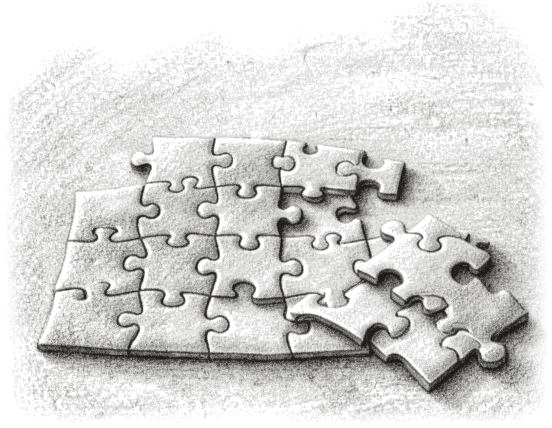
Bernard Suits described games through voluntarily accepted obstacles and the restricted means of overcoming them. We choose difficulty that would be unnecessary if we merely wanted the bare physical result.
This is a strange habit for people who complain about friction everywhere else.
The payment page should work immediately.
The queue should be shorter.
The form should not ask for the same thing twice.
Then, during our free time, we buy a device that gives us an enormous creature specifically designed to prevent us reaching the next room.
The boss.
A literal antagonist whose job is to stop the story moving until we become capable of making it move.
Consider a familiar sort of encounter in a game.
You attack. The creature lifts an arm. You are hit.
Again.
You attack, see the arm, dodge too late.
Again.
Eventually you notice that the shoulder moves before the arm. Now there is a little more time.
“Oh. That's what you're doing.”
The creature has not become kinder.
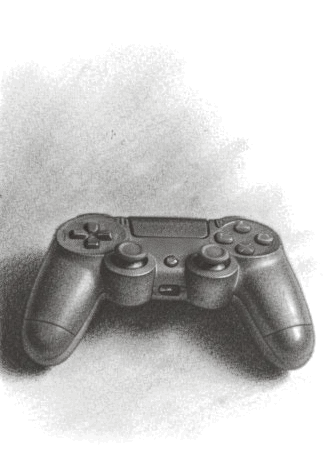
You have acquired a way of answering it.
When it finally falls, the satisfaction contains several unsuccessful versions of you. The game has made earned progress unusually visible.
A cheat that removed the boss would let you enter the next room. It might remove exactly the thing you were playing to experience.
This is why an obstacle can be artificial without the involvement being fake. The rules were designed. The uncertainty during the attempt was real. So was the change between not being able to do it and doing it.
That does not explain all games. People play to explore, build, cooperate or simply enjoy a world. A puzzle does not need a monster to keep somebody absorbed.
But when a game does use opposition, it can arrange the conditions with remarkable precision.
A visible goal. A resisting world. Failure that permits another attempt. A harder encounter waiting after the easier one has stopped testing you.
The game keeps generating prey appropriate to the player's growing power.
Of course, a game can keep someone present without doing much more than repeating a reward schedule. Engagement alone remains a poor test of value. Still, our willingness to choose these obstacles helps clarify the book's opening puzzle.
We do not always want life to become easier in every possible sense.
Sometimes we want the unnecessary difficulty to remain, because it gives our actions the shape we came for.
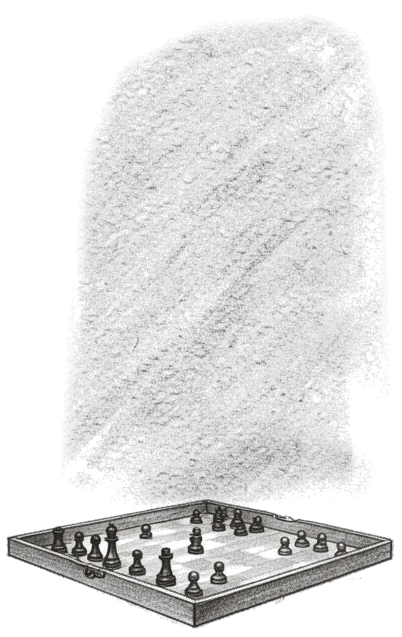
The player could remove the boss.
Instead she wants another attempt.
She chose this villain.
Check · From memory
When a game uses opposition, the chapter says it can arrange four conditions. Say them in your head, then look.
- 1A visible goal.
- 2A resisting world.
- 3Failure that permits another attempt.
- 4A harder encounter waiting after the easier one has stopped testing you.
Close
So if we can choose, which one should we choose?
Notes and references
Promoted Out of the Fight
[1] Benson, A., Li, D., & Shue, K. (2019). "Promotions and the Peter Principle," The Quarterly Journal of Economics.
Nobody Wants the Cheat Code
[1] Suits, Bernard. The Grasshopper: Games, Life and Utopia (1978; third edition 2014).
From Villains, Power & Success: What Are You Fighting? by Uday Wagh. Abridged for the screen.