Part V · What Happens If You Win?
Chapter 10
The Fantasy Is Doing More Work Than You Think
A Rolex can do quite a lot of work before you own it.
It can sit in a shop window, appear in a photograph or occupy a small part of the mind during a particularly tedious meeting.
You look at the time on your perfectly adequate watch. Then think about the other watch.
It looks like wanting an object. That seems incomplete.
The imagined object can help organise the person doing the wanting.
Another late evening becomes part of a route. A disappointment becomes something to get through.
Ask somebody what they want and they may name the object. Ask what the object will mean and the answer can become much longer.
"I'll know I've done well."
"I won't have to explain myself anymore."
"My parents will stop worrying."
That is an impressive amount of responsibility to give a watch.
I don't mean those hopes are foolish. Some rewards really do alter a person's life.
But the fantasy often includes changes the reward cannot promise.
An entire emotional atmosphere. The future person is more relaxed, more respected, less doubtful.
He has somehow become the sort of person who knows what to do with the life the present person is working to obtain.
The missing middle gets quietly edited out.
This is where Schopenhauer becomes an uncomfortable neighbour. He thought a great deal about desire and the boredom that can follow satisfaction.
What he brings into view is uncomfortable.
Your move · How much would change?
What is the fantasy doing today?
Not what pleasure will the reward provide eventually. What would become harder to explain this week if the future suddenly stopped pointing toward it?
For some people the answer might be surprisingly large.
The job is unpleasant but temporary. The loneliness belongs to a period of sacrifice. Even the uncertainty can feel meaningful because there is a destination capable of settling it.
The fantasy is becoming load-bearing. Part of the present is resting on something that does not exist yet.
Now there is a problem.
An imagined reward is allowed to do several jobs without having to demonstrate that it can actually do them. The actual reward will have to turn up and be itself. A watch. A car. A number in an account.
Research on adaptation reminds us that the intensity attached to changed circumstances can settle. But even before that settling, there is another difference.
The fantasy could keep pointing forward. The possession cannot keep being obtained.
For years before the purchase, the car has already been doing something. Perhaps it has been more than a possible source of pleasure.
Perhaps it has been prey.
A future that kept moving the person because it had not yet become his present.
Once the Lamborghini Is Downstairs, It Stops Being Prey
Now the Lamborghini is downstairs. Actual keys. Actual parking space.
The car can be wonderful. You can enjoy driving it. Walk away, look back once, then pretend you were checking whether you locked it.
None of that is the problem.
The problem is that the car has changed its role.
Yesterday it was something you were becoming able to buy. Today it is something you have bought.
That transition contains a disappearance we do not always notice.
The distance is gone. You cannot keep making progress toward obtaining this particular car.
The reward has stopped resisting acquisition. It is still enjoyable.
It is no longer prey.
The ordinary phone buyer from Chapter 6 already gave us a small version. "I think I was more excited yesterday." The phone was fine.
Yesterday simply contained more of the questions that made attention move toward it.
Scale that up to something that has organised years rather than weeks.
Now the object arrives carrying a great deal of past effort, but very little remaining distance. You may still like it exactly as much as the actual thing deserves.
You may miss what it let you want.
That sounds absurd until I remember how different those jobs are. A car can take you somewhere. For years, the imagined car may have been taking you toward a version of yourself.
Once you arrive, it cannot keep being the road to that arrival.
"How is it?"
"Fantastic."
"So, that's it?"
"What do you mean?"
"You've got it."
"Yeah."
A pause.
This is not proof that acquisition always disappoints. Sometimes getting the thing improves almost everything important about daily life.
The narrower point is that enjoying possession does not automatically reproduce the structure of pursuit.
The car can keep doing its job for years. The fight that brought it downstairs has finished.
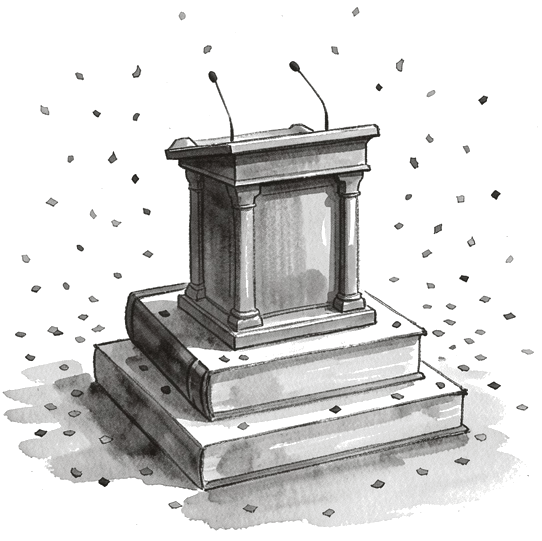
The Morning After You Win
The strange morning is the one after the celebration.
Before it, there was something obvious to do. Prepare. Improve. Finish. Win. Yesterday it happened. Today you are still the same person, with considerably less information about what the next few hours are for.
I keep thinking about someone finishing a book. For months there was a document to open. A difficult section waiting. Then the manuscript is sent. It is a good moment.
The next morning the writer sits down and nearly opens it again.
The hand knows the routine before the person remembers there is no longer a reason to perform it.
That does not mean she wishes the book were unfinished.
She can be proud of finishing and miss the thing that finishing removed.
Athletes make this problem unusually visible. Training, competitions, selection, rivals, the next event. A championship gives one ending.
Research on life after sport describes how losing the activity can also mean changes in identity, routine and the social world. That is broader than the vanished-opponent idea. It also helps explain why the vanished opponent might matter.
The rival helped give today's training a future.
The unfinished book did the same thing for the writer.
Then victory removes the resistance. And we expect fulfilment to take over all its jobs.
Maybe that is asking a result to do too much.
A result can settle whether the attempt succeeded. It cannot necessarily supply a rhythm, a social world, or the next meaningful uncertainty.
This is what I mean by the victory vacuum.
Not a literal compartment in the brain. More like the space left when something that organised attention stops asking for it.
The reward has arrived. The person has lost the repeated encounter in which yesterday's effort changed what became possible today.
Chapter 6 ended by asking what we intend to do on the morning after it comes true. Chapter 2 asked what happens to Batman without the Joker. So let the Joker be gone, and let the city stay quiet for a week.
What does Batman do with a Tuesday that needs no saving?
I know this morning from the inside.
I spent six or seven years on the company behind SuperPay. It was very stressful. Then it was acquired, which is the ending founders say they want.
What came after was post-exit depression. For about six months I coasted at a new job. I sat through meetings with my mind somewhere else.
The company had won. I had no fight left to walk into on Monday.
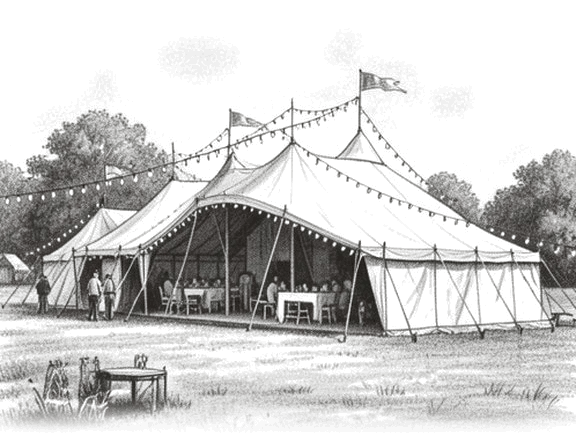
Outside, the story has reached the part people understand.
Congratulations. You did it.
Inside, another question may already be forming.
What did I just lose by doing it?
Nearly There
"Someday I'll write a book." There is a lot of room inside someday.
The book can be excellent. The writer can be the person she hopes to become.
Now change the sentence. "I have written a book." Much more specific.
These pages. Whatever they can actually do. And tomorrow is no longer the day on which you move closer to having written one.
I wonder whether this helps explain some of what gets called fear of success. The phrase sounds slightly odd to me.
Why fear the thing you are trying to obtain?
Perhaps, in some cases, the feared thing is what comes immediately afterward. The ending. The judgment. But also the disappearance of a future that has been keeping the present occupied.
Someone can genuinely want the achievement and keep restoring distance from it. One more revision. A larger launch. A qualification needed before the attempt really counts.
The finish line becomes uncomfortable only when it becomes reachable.
"What are you working on?"
"My book."
"Still?"
"Nearly there."
Nearly there keeps the identity intact without forcing it into the awkward next tense. Finished. Then what?
I am not trying to explain procrastination with one theory. Sometimes someone is frightened of failure. Sometimes they lack time or money. But the possibility feels worth separating.
Fear of failing would make the result threatening. Fear of what follows success would make the ending threatening even if the result were good.
The person may be protecting a story rather than avoiding a reward. "Someday I'll..." lets a future remain open indefinitely. Actually doing it closes one version of the future and asks for another.
Check · From memory
Once the car is downstairs, the chapter says three short things about the reward. Say them in your head, then look.
- 1The reward has stopped resisting acquisition.
- 2It is still enjoyable.
- 3It is no longer prey.
Close
Perhaps some moving finish lines have this hidden use. They keep the thing ahead. They keep the person on the way. The prize stays available without forcing the question the prize was supposed to settle.
Now what?
Notes and references
The Fantasy Is Doing More Work Than You Think
[1] Schopenhauer, Arthur. The Wisdom of Life.
[2] Diener, E., Lucas, R. E., & Scollon, C. N. (2006). "Beyond the Hedonic Treadmill."
The Morning After You Win
[1] Chun, Y., Wendling, E., & Sagas, M. (2023). "Identity Work in Athletes."
[2] "Adaptation to life after sport" (2023).
From Villains, Power & Success: What Are You Fighting? by Uday Wagh. Abridged for the screen.