Part I · Maybe You Need a Villain
Chapter 1
Every Story Needs a Villain
Before we talk about power, success, money or why some people seem unable to stop competing even after they have already won, I want to start somewhere much simpler.
Stories.
Think about every story you have enjoyed enough to remember. A film, a book, a myth your grandmother told you, a superhero movie, the Ramayana, a match you watched twenty years ago and still talk about.
There is usually someone you care about. And there is something standing in their way.
That second part may be more important than we realise.
Storytelling is one of those strange human behaviours that survives every change in technology.
Before Netflix, we had television. Before television, cinema. Before cinema, theatre and novels. Before novels, there were stories spoken aloud. Take away the screen, the printing press and even writing itself, and people still sit around telling each other what happened.
There is good reason to think stories were useful long before they became entertainment.
Researchers studying the Agta, a hunter-gatherer population in the Philippines, found that skilled storytellers were highly valued within their communities. Their stories often dealt with cooperation, equality and how people should behave with each other. Camps with more skilled storytellers also showed higher levels of cooperation.
So stories were not simply something humans did when they were bored.
They helped us understand the world, remember things, teach things and make sense of other people.
But what actually makes something a story?
A person waking up, eating breakfast, sitting quietly for eight hours and then going back to bed is technically a sequence of events. Nobody is buying a cinema ticket for it.
Something has to happen. And usually, something has to go wrong.
Your move
Take the Ramayana.
Rama goes into exile. He lives in the forest. Fourteen years later, he returns.
There is a story there, I suppose, but it is not the story millions of people have remembered for centuries.
Ravana changes everything.
Now Sita has been taken. There is someone responsible. There is something Rama cannot simply walk around.
He has to gather allies, cross an ocean, fight a war and defeat someone standing between him and what he wants.
The same structure appears everywhere.
Remove Voldemort from Harry Potter and a large part of the story becomes a gifted child attending a very unusual school. Remove the Empire from Star Wars and Luke Skywalker is a frustrated young man living with his family on a farm. Remove the shark from Jaws and you have a police chief spending the summer in a coastal town.
Obviously, these stories contain much more than their villains. But the villain performs a very specific job.
The villain gives the hero something to do.
Without opposition, the protagonist can simply walk toward what they want. There is no reason to change. No reason to become stronger. No reason to take a risk.
The opposition creates the fight. And the fight makes the story move.
When I say “villain,” I do not necessarily mean an evil person with a weapon.
The technical word would be antagonist, but villain is easier to understand, and for now it does the job.
Apollo Creed is not evil in Rocky. He is simply the man Rocky has to stand against.
A mountain is not evil either.
It has no opinion about the climber trying to reach its summit. Yet for those hours, the mountain behaves like an opponent. It pushes back. The higher you go, the harder it becomes. It can exhaust you, injure you and force you to turn around.
The same thing can happen with a market, an addiction, a bureaucracy, a competitor or even a blank page. The thing does not need to be alive.
It only needs to feel as though it is standing between you and where you want to go.
That distinction matters because a goal is not the same thing as an opponent.
“I want to reach the other side of the city” is a goal. Now close the road. Make the trains stop. Put a storm between you and home. Suddenly the experience changes.
“I want to build a company” is a goal.
Give me a competitor taking your customers, investors saying no, three months of cash left and a product that keeps breaking, and now you have a fight.
A destination tells you where to go.
The opponent gives you something to overcome on the way there.
This would simply be an observation about films and books if we did not do exactly the same thing with our own lives.
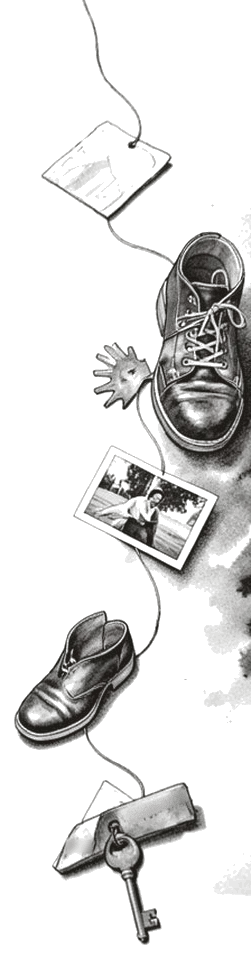
Psychologist Dan McAdams has spent decades studying what he calls narrative identity. In simple language, people turn their lives into stories. We take thousands of things that happened to us, select some, forget others, connect them together and gradually build an explanation for who we are and how we got here.
You can hear it whenever someone tells you their life story.
“I came from nothing.”
“My father never believed in me.”
“They told me I was not smart enough.”
“My family wanted me to become a doctor.”
“My boss kept holding me back.”
“Society does not reward people like us.”
“I proved everyone wrong.”
Notice how naturally these sentences already contain characters.
There is a protagonist. There is an obstacle. Very often, there is someone or something on the other side.
We do not say, “A statistically complicated mixture of circumstances made this outcome less probable.” We say:
They didn't want me to succeed.
The story becomes easier to understand once opposition has a face.
And, of course, finding the hero in our own story is usually not difficult. It is us.
Even when we behave badly, most of us can explain ourselves.
I shouted because I was pushed too far. I lied because I had no choice. I broke the rule because the rule was unfair. I hurt someone, but you need to understand what happened before that.
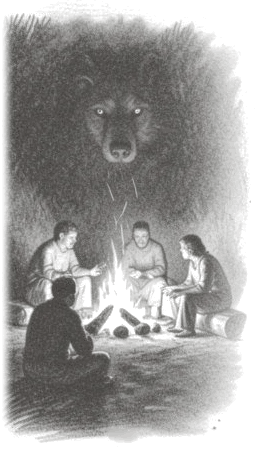
We experience our own intentions from the inside, so we always have context. Other people rarely receive such a generous screenplay. Which means the hero is easy.
The interesting question is: who is the villain?
For much of human history, I suspect we did not have to search very hard.
There were animals capable of killing you. Other groups competing for the same land and resources. Hunger. Disease. Weather. Injury. Someone stronger who wanted what you had.
The opposition was not philosophical.
It arrived whether you felt motivated that morning or not.
If there was not enough food, you needed to find food. If something dangerous entered the camp, someone had to deal with it. If another group attacked, there was no option to say you were currently struggling to find your purpose.
Purpose found you.
And sometimes it had teeth.
That does not mean life was better. It means the fight was obvious.
Then we became very good at solving problems.
We built walls. We learned agriculture. We created governments, police, hospitals, vaccines, refrigeration, plumbing, supermarkets and machines capable of doing work that once required entire groups of people.
For many of us, food is now sitting a few metres away. Clean water arrives through a pipe. A locked door protects us while we sleep. If the weather becomes unpleasant, we change the temperature of the room.
This is one of humanity's greatest achievements.
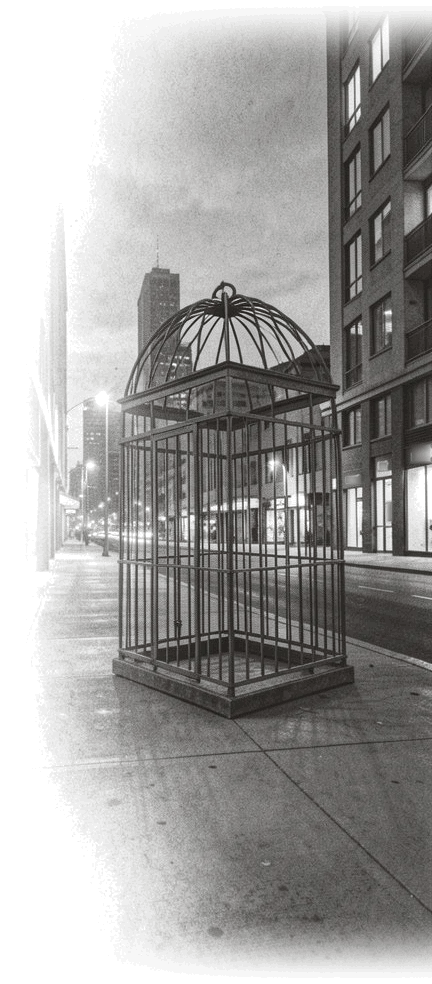
I am not arguing that we should undo it.
Nobody needs to release a tiger into Mumbai so that office workers can rediscover meaning.
But progress may have created an unusual psychological situation.
We removed many of the obvious opponents faster than we removed the machinery that expects opposition.
Modern life still has problems, obviously. Mortgages, deadlines, traffic, difficult bosses, failed relationships, taxes, illness, inboxes full of unread email.
But many of these problems are diffuse.
There is no clear creature standing in front of you. Nothing you can point at and say, that is what I am fighting.
So now we have the hero. We have goals. We have comfort. We even have endless advice about finding purpose.
But the old villain is harder to see.
Imagine a superhero film where nothing happens.
The hero wakes up. The city is safe. Nobody commits a crime. No asteroid is heading toward Earth. Nobody has been kidnapped. There is no villain hiding somewhere.
He has breakfast. Checks his email. Goes to a meeting. Orders lunch. Watches television. Sleeps.
The next morning, he does it again.
There is nothing particularly wrong with his life. In fact, by almost every objective measure, things are going extremely well.
But you would stop watching. Because nothing is happening.
And that is the distinction I want you to hold onto.
A comfortable protagonist is not necessarily an engaged protagonist.
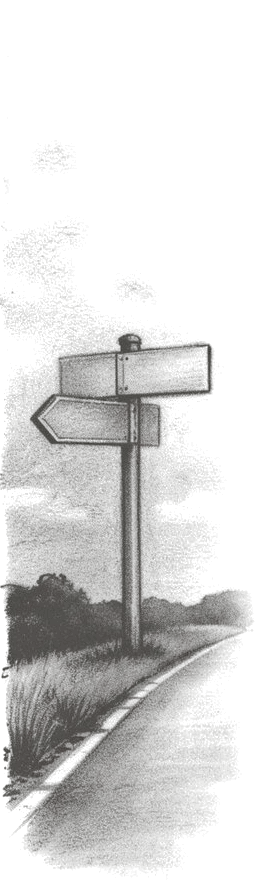
We spend a lot of time asking people what they want.
What career do you want?
How much money do you want?
Where do you want to live?
Do you want a family?
Do you want freedom?
Do you want recognition?
Those are useful questions. But they all ask about the destination.
I think there is another question that may tell us much more about why someone gets out of bed with energy, why they can work obsessively for years, why winning sometimes leaves them strangely empty, and why entire societies can suddenly organise themselves around a common enemy. The question is:
What are you fighting?
Because a destination tells you where you want to arrive.
A fight gives you a reason to move.
Maybe humans do not merely need goals, comfort or even what we normally call purpose. Maybe we need something on the other side saying no. Something to defeat, disprove, escape, outlast or overcome.
Check · From memory
What does a destination do for you, and what does a fight do? Say both in your head, then look.
- 1A destinationtells you where you want to arrive.
- 2A fightgives you a reason to move.
Close
And when nothing is standing there, perhaps we do something even more interesting.
We find something. Sometimes we invent something.
That is where the rest of this book begins.
Notes and references
[1] Smith, D., Schlaepfer, P., Major, K., et al. (2017). "Cooperation and the evolution of hunter-gatherer storytelling." Nature Communications, 8, 1853.
[2] McAdams, D. P. (2001). "The Psychology of Life Stories." Review of General Psychology, 5(2), 100–122.
McAdams, D. P. & McLean, K. C. (2013). "Narrative Identity." Current Directions in Psychological Science, 22(3), 233–238.
From Villains, Power & Success: What Are You Fighting? by Uday Wagh. Abridged for the screen.